
A full clean of a coffee machine takes 25 to 40 minutes, and you’ll need to do a quick rinse daily, a water-and-vinegar descale every 1 to 3 months, and a deeper clean of the parts every week or two. If the water flows slowly, it’s already overdue.
How to Clean a Coffee Machine Step by Step

Work through these in order. The whole job is simple, and you don’t need special tools for most of it.
Unplug the machine and let it cool. Never start on a hot machine. Wait until the outside feels cool to the touch, which usually takes 15 to 20 minutes after the last cup.
Take out every removable part. Pull the drip tray, water tank, filter basket, portafilter, and carafe. If it’s a pod machine, remove the pod holder and the used-pod bin too.
Wash the removable parts by hand. Use warm water and a little dish soap. Rinse them well. Most of these parts aren’t dishwasher safe, so check the maker’s manual before you load them.
Rinse the water tank and refill it. A quick rinse clears loose residue. Then fill it to the max line so you have enough water for the cleaning cycle.
Run a water-only cycle. Put the tank back, place a large cup or bowl under the spout, and run a full brew cycle with no coffee. This flushes loose grounds and old water out of the lines.
Descale with a vinegar or citric acid solution. Mix 1 part white vinegar with 2 parts water, or use a commercial descaler made for coffee machines. Pour it in and run a brew cycle. Run the solution through the machine, let it sit in the lines for 20 to 30 minutes, then run the rest through.
Flush with clean water twice. Fill the tank with plain water and run two full cycles. This removes every trace of vinegar or descaler so your next cup doesn’t taste sour.
Wipe the outside and the group head. Use a damp cloth on the body, the steam wand, and the area where the portafilter locks in. A soft brush helps around the group head.
Dry everything and put it back. Let the parts air dry or wipe them with a clean cloth. Reassemble, plug in, and run one more short cycle before your next coffee.
Tip: Never use vinegar on aluminum parts. It can pit the metal over time. Check your manual first — if the maker says citric acid, use that instead.
How Often Should You Clean Each Part?
Different parts need different schedules. Doing the easy ones often means the hard descale stays rare.
| Part | How often | What to use |
|---|---|---|
| Drip tray and pod bin | Daily | Warm soapy water |
| Portafilter and basket | After every use | Warm water, quick rinse |
| Water tank | Weekly | Soapy water, full rinse |
| Group head and steam wand | Weekly | Damp cloth, soft brush |
| Full descale (lines) | Every 1 to 3 months | Vinegar mix or descaler |
| Milk frother parts | After every use | Warm soapy water |
The descale timing depends on your water. If you live in a hard-water area, you’ll descale closer to every month. Soft water can stretch it to 3 months. Many machines have a descale light that tells you when it’s time — trust that light over the calendar.
How Long Does a Full Clean Take?
A complete clean takes 25 to 40 minutes from start to finish, and most of that’s waiting while the descaler sits and the flush cycles run. The hands-on work is only about 10 minutes.
A daily rinse takes under a minute. A weekly part wash takes about 5 minutes. The full descale is the long one, so plan it for a day when you won’t want coffee right away.
What You’ll Need
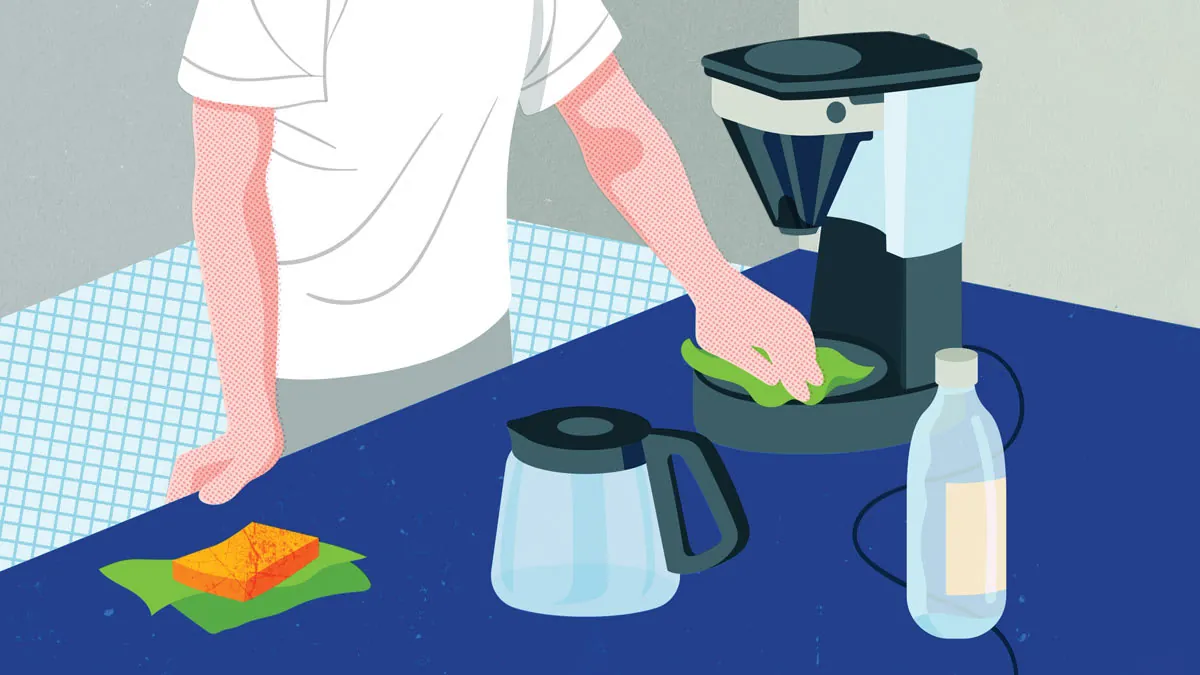
Gather these before you start so you’re not hunting mid-job:
- Warm water and mild dish soap
- White vinegar or a coffee-machine descaler
- A soft cloth and a small soft brush
- A large cup or bowl for catching water
- Your machine’s manual, for part-specific warnings
If your machine came with a cleaning tablet or a specific descaler, use that. Makers test their machines with their own products, and the manual is the one place that settles what’s safe for your exact model.
Why Your Coffee Tastes Bad After Cleaning
If your coffee tastes like vinegar or chemicals, you didn’t flush enough. Run two more full water cycles and taste the plain water coming out. When the water tastes clean, you’re done.
If your coffee tastes bitter or weak after a clean, the problem usually isn’t dirt. It’s the grind size or the coffee-to-water ratio. Cleaning fixes slow flow and off-flavors, not weak flavor from old beans.
Tip: If the water flows slowly even after a descale, the buildup may be too deep for vinegar. A professional service can strip the machine fully.
Mistakes That Cause Real Problems
Can I Use Dish Soap Inside the Machine?
No. Dish soap leaves residue in the lines that’s hard to rinse out, and it can make your coffee taste soapy for days. Use soap only on the removable parts you can rinse by hand. For the inside, stick to vinegar, citric acid, or a proper descaler.
Why Did My Machine Stop Working After Cleaning?
The most common reason is water left in the wrong place. If you poured water over the top or soaked the base, liquid can reach the electronics. Wipe the outside with a damp — not wet — cloth, and never dunk the main body. If it still won’t turn on after drying overnight, that’s a job for a repair shop.
Is Vinegar Safe for Every Machine?
No. Vinegar is fine for most drip machines and many pod machines, but some makers warn against it because it can damage seals and rubber parts over time. Check your manual first. If it says to use a specific descaler, follow that. When in doubt, a citric-acid descaler is gentler on rubber than vinegar.
Can I Skip the Descale If I Only Drink Black Coffee?
No. Scale builds up from the water, not the coffee. Black coffee drinkers get the same mineral buildup as anyone else, and it’s actually easier to notice because there’s no milk hiding the taste. Skip the descale and the machine works harder, heats slower, and eventually clogs.
When to Fix It Yourself and When to Get Help
Most cleaning is a do-it-yourself job. Washing parts, running cycles, and descaling are all safe if you follow the steps above.
Call a professional or replace the machine when the water won’t flow at all after a full descale, when it leaks from the base, or when it won’t power on. Those point to internal problems — pumps, seals, or heating parts — and a repair often costs a large share of a new machine.
For anything inside the sealed housing, including the heating element and internal wiring, leave it to a qualified technician. Opening the machine yourself risks a shock even after unplugging, because some parts hold a charge.
For food-safety guidance on cleaning surfaces and equipment that touch what you consume, the USDA Food Safety and Inspection Service explains why rinsing after cleaning matters. And if you use a reusable water filter in your tank, the CDC’s guidance on cleaning water containers covers how often to replace or clean them.
Frequently Asked Questions
Can I clean my coffee machine with just water?
Yes, for daily and weekly rinses. Plain water clears loose grounds and old coffee oils from the parts and lines. But water alone won’t remove mineral scale, so you still need a vinegar or descaler cycle every 1 to 3 months. Water-only cleaning keeps things fresh between deeper cleans.
How long should I let vinegar sit in the machine?
Let it sit for 20 to 30 minutes before running the rest through. This gives the acid time to break down the mineral buildup inside the lines. Leaving it much longer doesn’t help and can harm rubber seals on some models. Afterward, flush with plain water at least twice.
Can I put coffee machine parts in the dishwasher?
Some parts are dishwasher safe and some aren’t, and it depends on your model. Check the manual before loading anything. Hot dishwasher cycles can warp plastic tanks, crack carafes, and damage rubber gaskets. When you’re not sure, hand wash with warm soapy water and rinse well.
Does cleaning a coffee machine void the warranty?
No, regular cleaning keeps your warranty valid, and skipping it can lead to damage that a warranty won’t cover. Most makers require you to descale on schedule, and some machines log the cycles. Using the wrong cleaner, like vinegar on a model that forbids it, can cause damage a warranty won’t cover. Follow the manual’s cleaning section.
How do I know when my machine needs descaling?
Slow water flow, a longer brew time, and a change in taste are the main signs. Many machines also show a descale light or message. If you live in a hard-water area, don’t wait for the light — descale monthly. Soft-water users can usually wait 2 to 3 months.
Can I use lemon juice instead of vinegar?
Yes, lemon juice works, but less predictably. Its citric acid does break down scale, though the strength varies from bottle to bottle. Flush the machine extra well afterward.
Conclusion
Pick one thing and do it today: run a plain water cycle, or soak the basket while you eat breakfast. You don’t have to tackle everything at once. Set a reminder on your phone for next month, and your machine will keep pouring good coffee for years.