
An air fryer is a small countertop oven that cooks food with fast-moving hot air instead of oil. A fan pushes air past a heating element, and that hot air circles the food at high speed, so the outside turns brown and crisp while the inside stays moist. It doesn’t fry in oil — it copies the result.
How an Air Fryer Works
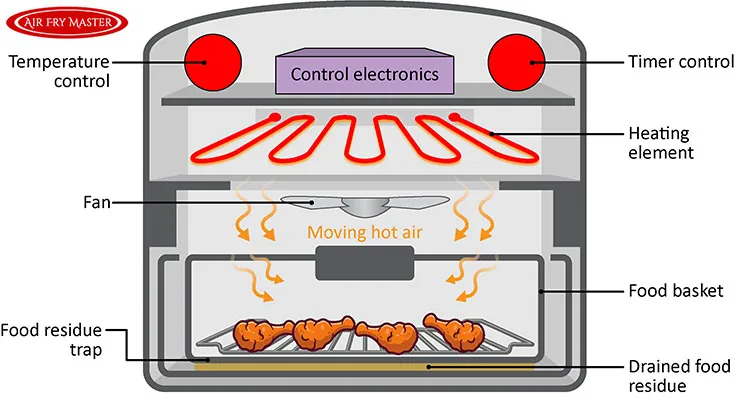
It works like a tiny convection oven. A heating element sits near the top, a fan sits behind or above it, and together they push hot air down and around the food in a steady loop.
That moving air matters. In a normal oven, air sits still and heat reaches the food slowly. In an air fryer, the fan keeps replacing the cool air around the food with hot air, so the surface dries out and browns much faster. The basket is also small, so the heat stays close to the food instead of escaping into a big space.
The result is browning on the outside without a pot of oil. You still need a thin coat of oil for good color on many foods, but a spoonful does what a cup used to do.
Tip: Don’t crowd the basket. Air has to move around each piece, so one layer cooks crisp and a full pile steams.
What’s Inside an Air Fryer and What Each Part Does
Every model has the same basic parts, even when the outside looks different. Knowing them helps you understand why food cooks the way it does.
- Heating element: the metal coil that makes the heat, usually at the top.
- Fan: moves that heat around the food in a fast circle.
- Basket or tray: holds the food and lets air pass underneath.
- Vent: lets steam and hot air escape so food doesn’t get soggy.
- Controls: set the temperature and the timer, either with dials or a touch screen.
Some models have a paddle that stirs the food, and some are shaped like a drawer while others look like a small oven with racks. The cooking idea is the same in all of them.
Air Fryer vs Deep Fryer vs Regular Oven
The table below shows the differences that actually change how you cook, not small details. A deep fryer cooks by surrounding food with hot oil. A regular oven cooks with still, dry heat. An air fryer sits between them.
| Feature | Air Fryer | Deep Fryer | Regular Oven |
|---|---|---|---|
| Heat source | Fast-moving hot air | Hot oil | Still hot air |
| Oil needed | A spoonful or none | Several cups | A spoonful or none |
| Speed | Faster than an oven | Fast | Slowest |
| Best for | Small batches, crisping | Large batches, heavy batter | Big meals, baking |
| Cleanup | Wash the basket | Strain or discard oil | Wipe the oven |
The trade-off is batch size. An air fryer cooks quickly, but you give up the space to cook a lot at once. If you’re feeding a crowd, an oven or deep fryer still wins.
How Long Does Food Take in an Air Fryer?
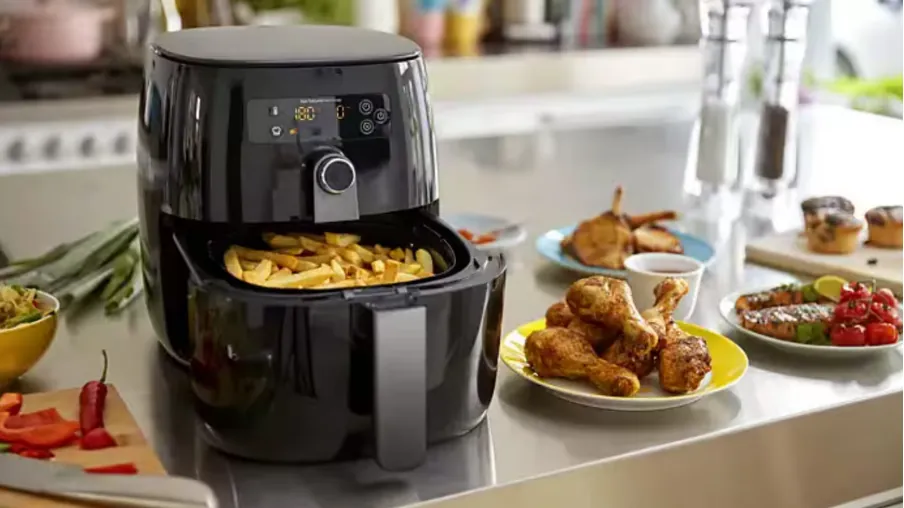
Times depend on the food, its size, and your model’s wattage. A higher-wattage machine heats up faster and recovers heat more quickly, so treat these as starting points and check early the first time.
| Food | Temperature | Time | Shake halfway? |
|---|---|---|---|
| Frozen fries | 400°F | 15–20 min | Yes |
| Chicken wings | 380°F | 22–28 min | Yes |
| Chicken breast | 375°F | 18–22 min | No |
| Salmon fillet | 390°F | 8–12 min | No |
| Vegetables | 380°F | 10–15 min | Yes |
| Reheated pizza | 350°F | 3–5 min | No |
Shaking the basket halfway through helps loose foods cook evenly. For meat, the safe way to check doneness is a food thermometer, not the clock. The USDA publishes safe minimum cooking temperatures that apply to any cooking method, including this one.
Is an Air Fryer Healthier Than Frying?
Usually, yes — but the reason is simple. You use far less oil, so the food carries less added fat than deep-fried versions of the same dish.
It’s not a magic health machine. If you cook breaded, processed, or sugary foods, they’re still those foods. An air fryer changes the cooking method, not the ingredients. Fries made in one still have the calories of potatoes.
The catch here is your recipe. The machine can’t turn a heavy dish into a light one — only your choice of what goes in the basket does that.
What an Air Fryer Isn’t Good At
It’s a small, fast oven, and that shapes what it can’t do well. Knowing the limits saves you from disappointment.
- Large batches: a big family meal won’t fit in one go.
- Wet batters: loose batter drips through the basket before it sets.
- Whole roasts: a whole chicken or large roast is too big to cook evenly.
- Long, slow cooking: it’s built for speed, not for hours of low heat.
This isn’t the right tool if you mostly cook for a big household or rely on wet-batter recipes. A regular oven or a deep fryer handles those jobs better.
Mistakes People Make With a New Air Fryer
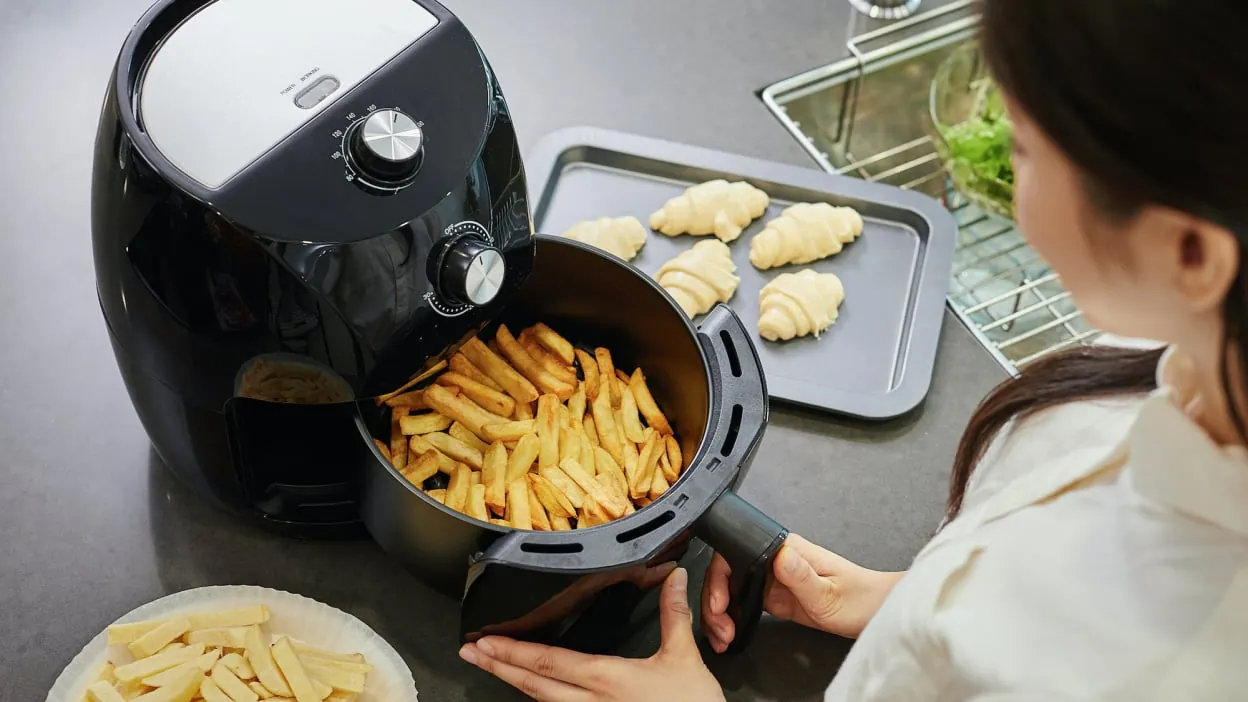
Most first-week problems come from a few habits. Fixing them is quick.
Why does my food come out soggy?
You probably overcrowded the basket or didn’t shake it. Food piled on top of itself traps steam, and steam makes things soft. Cook in one layer and shake loose items halfway.
Why is the outside burnt but the inside raw?
The temperature is too high for that food’s thickness. A thick piece browns outside before the center cooks. Lower the heat by about 25°F and add a few minutes, and use a thermometer for meat.
Why does my air fryer smoke?
Fat from fatty foods drips onto the hot element. Pour out the oil between batches, and add a splash of water under a rack when cooking greasy meat. If it still smokes, the machine needs a clean.
Why does food taste dry?
It’s usually overcooked, not the machine’s fault. Lean meats dry out fast at high heat. Cook them a little less and check early.
The most common mistake is walking away. Air fryers cook fast, so a few extra minutes can turn crisp food into dry food.
Frequently Asked Questions
Do I need to preheat an air fryer?
Many models cook better after 2–3 minutes of preheating, especially for foods you want crisp. Preheating helps most when you want a crisp exterior. Check your manual, since some makers say preheating isn’t needed at all.
Can I put foil or parchment in an air fryer?
Yes, but only if it’s weighed down by food. Loose foil or paper can fly up into the heating element and burn. Never cover the whole basket floor, because that blocks airflow and slows cooking.
Is an air fryer safe to leave unattended?
It’s safe to run while you’re nearby in the kitchen, but don’t leave the house with it on. Unplug it when you’re done. Keep it on a clear, heat-safe surface with space around the vent.
Can I cook frozen food straight from the freezer?
Yes, that’s one of its best uses. Add a few extra minutes compared to fresh food and shake the basket halfway. Don’t thaw first unless the recipe says to.
How do I clean an air fryer?
Let the basket cool, then wash it with warm soapy water or in the dishwasher if the maker allows. Wipe the inside with a damp cloth. Never put the main unit in water, and never pour water into it.
Does an air fryer use a lot of electricity?
It draws a fair amount of power while running, but it runs for a short time. For small portions it often uses less total energy than heating a full-size oven. Exact use depends on your model’s wattage and how long you run it.
Conclusion
Once you know your model’s wattage and its hot spots, you’ll stop guessing and start timing by sight and smell. Cook a small batch of something simple first — fries or vegetables — and note how your machine behaves. That one test teaches you more than any chart.