
How to Choose Cookware Sets Choosing the right cookware set can change the way you cook—and enjoy your meals. But with so many options out there, how do you find the one that fits your kitchen and your style?
You want pots and pans that make cooking easier, last longer, and help you create delicious dishes every time. In this guide, you’ll discover simple tips to pick cookware that matches your needs, saves you money, and turns your cooking into a joy.
Keep reading, and get ready to upgrade your kitchen with confidence.
Types Of Cookware Materials
Choosing the right cookware material matters for cooking success. Each material cooks food differently and affects flavor and heat. Some materials last long, while others need gentle care. Knowing types of cookware materials helps pick the best set for your kitchen.
Stainless Steel
Stainless steel is strong and resists rust. It works well for searing and browning food. This material does not react with acidic ingredients. It cleans easily and looks shiny for years. Stainless steel cookware often has an aluminum core to spread heat evenly.
Nonstick
Nonstick pans stop food from sticking. They need less oil, making meals healthier. These pans cook eggs and pancakes perfectly. Nonstick coatings wear out faster than metal. Use gentle tools and low heat to keep them safe.
Cast Iron
Cast iron holds heat for a long time. It cooks food evenly and is great for frying. Over time, cast iron becomes naturally nonstick. It requires seasoning to stay rust-free. Cast iron pans are heavy and need careful cleaning.
Copper
Copper heats very fast and cools quickly. It gives precise temperature control for delicate dishes. Copper pans often have a stainless steel lining inside. Copper looks beautiful but needs polishing to avoid tarnish. It costs more than other materials.
Aluminum
Aluminum is light and heats up fast. It spreads heat evenly to prevent hot spots. Pure aluminum can react with some foods, changing taste and color. Anodized aluminum has a hard surface that protects it. Aluminum cookware is usually budget-friendly and easy to handle.
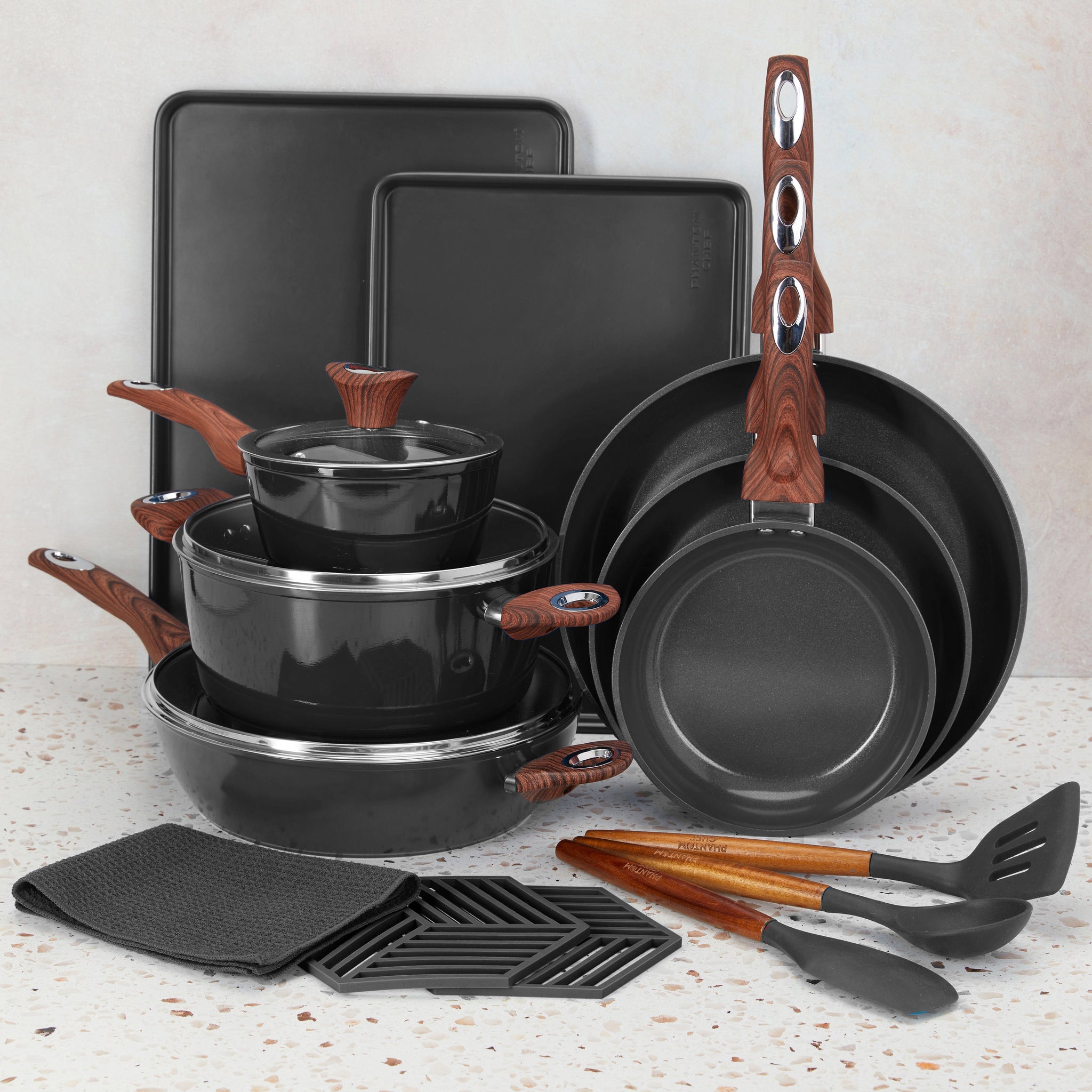
Credit: phantomchef.com
Essential Cookware Pieces
Choosing the right cookware set starts with knowing the essential pieces. These basic pots and pans handle most cooking tasks. They fit different recipes and cooking styles. A good set saves space and money. It also makes cooking easier and more fun.
Frying Pans And Skillets
Frying pans and skillets are flat and shallow. They cook food quickly with little oil. Perfect for frying eggs, pancakes, and vegetables. Non-stick versions help with easy cleaning. Use them for sautéing and searing too.
Saucepans
Saucepans have tall sides and a lid. Ideal for boiling, simmering, and making sauces. Use them for soups, rice, and stews. A small saucepan is handy for heating milk or melting butter. Choose one with a heavy bottom to avoid burning.
Stockpots
Stockpots are large and deep pots. They hold plenty of liquid for soups and stocks. Great for boiling pasta or making big meals. Look for sturdy handles for easy lifting. A tight lid helps keep heat and moisture in.
Sauté Pans
Sauté pans have straight sides and a wide surface. They cook food evenly and quickly. Use them for frying, browning, or reducing sauces. The straight sides stop food from spilling. They work well for dishes that need stirring.
Specialty Items
Specialty cookware meets unique cooking needs. Examples include grill pans, woks, and steamers. A grill pan adds char marks without outdoor grills. Woks cook stir-fries fast with high heat. Steamers help keep food healthy and tender. Pick specialty items based on your cooking style.
Size And Quantity Considerations
Choosing the right size and quantity of cookware sets is key for any kitchen. It affects how well you cook and store your pots and pans. Picking the right size helps save space and matches your cooking style. The number of pieces in a set also matters. Too many or too few can be a problem. This section helps you decide what fits your kitchen and cooking needs best.
Assessing Kitchen Space
Start by checking how much space you have in your kitchen. Look inside cabinets and drawers. Measure the width and depth. Consider space for stacking pots and pans. Small kitchens need smaller sets. Large kitchens can hold bigger sets. Think about countertop space too. You want cookware that fits without clutter.
Matching Cooking Habits
Think about the kind of meals you cook. Do you make simple dishes or complex recipes? Simple meals need fewer pots and pans. Complex meals need more types of cookware. Consider the types of pans you use most. Frying pans, saucepans, or stockpots. Choose sets that include your favorite pieces. This saves money and space.
Family Size Impact
Your family size affects cookware quantity. Small families or singles need fewer pots. Larger families need bigger pots and more pans. Bigger pots help cook large meals easily. More pans allow cooking several dishes at once. Choose cookware sets that match your family size. This keeps cooking smooth and efficient.

Credit: www.t-fal.com
Heat Compatibility And Cooking Surfaces
Choosing the right cookware means understanding heat compatibility and cooking surfaces. Different stoves and cooktops need specific types of cookware. Using the wrong cookware can damage your pots or your stove. It can also affect how well your food cooks. Knowing which cookware matches your heat source helps you cook better meals.
Gas Stove
Gas stoves use open flames to cook food. Most cookware works well on gas stoves. Look for pots with thick, flat bottoms for even heat. Avoid lightweight pans that warp easily. Cast iron, stainless steel, and aluminum are good choices. The flame should not touch the sides of the pan.
Electric Coil
Electric coil burners heat up metal coils under the cookware. Cookware must have flat bottoms to sit properly. Warped or rounded pans do not heat evenly. Stainless steel and cast iron work well. Avoid glass or ceramic pans that may crack from direct heat.
Induction Cooktops
Induction cooktops use magnetic fields to heat cookware. Cookware must be magnetic to work on induction. Test with a magnet; it should stick to the pan’s bottom. Cast iron and some stainless steel pans work best. Aluminum, copper, and glass pans usually do not work.
Oven Safety
Some cookware can move from stovetop to oven. Check the manufacturer’s label for oven safety. Avoid cookware with plastic or wooden handles. Oven-safe cookware should withstand high temperatures. This adds versatility for recipes needing both stove and oven.
Durability And Maintenance
Durability and maintenance are key factors when choosing cookware sets. Cookware that lasts long saves money and effort. Proper care keeps pots and pans looking new and working well. Understanding how to maintain your cookware protects your investment.
Cleaning Tips
Clean cookware after each use to avoid stains and buildup. Use mild dish soap and a soft sponge. Avoid harsh scrubbers that can damage the surface. For stuck food, soak the cookware in warm water first. Dry completely to prevent rust or water spots.
Avoiding Warping
Rapid temperature changes cause warping in cookware. Let pots cool before washing with cold water. Use medium heat during cooking to avoid stress on the metal. Avoid stacking heavy items on top of your cookware. Store cookware carefully to keep its shape intact.
Scratch Resistance
Choose cookware with scratch-resistant surfaces for longer life. Use wooden or silicone utensils to protect the coating. Avoid metal tools that can leave marks. Regular care helps keep the surface smooth and easy to clean. Scratches can affect cooking performance and appearance.
Budget And Brand Considerations
Choosing the right cookware set involves thinking about both your budget and brand choices. These two factors help ensure you buy pots and pans that last long and work well. Spending wisely can save money and avoid frequent replacements. Picking trusted brands often means better quality and support.
Balancing Cost And Quality
Cookware sets come in many price ranges. Cheaper sets might look good but wear out fast. Higher prices often mean better materials and durability. Find a set that fits your budget but still offers good performance. Consider what you cook most and pick pieces that suit your needs. Sometimes, spending a little more saves money over time.
Reputable Brands
Brands with a strong reputation usually produce reliable cookware. They use tested materials and maintain quality control. Known brands often provide clear product details and follow safety standards. Check reviews to see how others rate the brand’s products. Trusted brands give peace of mind about your purchase.
Warranty And Customer Support
A good warranty protects you from defects and damage. Look for sets with at least a few years of coverage. Customer support helps solve problems after buying. Brands with helpful service make it easier to fix or replace items. Always read warranty terms before choosing a cookware set.
Ergonomics And Design Features
Ergonomics and design features play a big role in choosing cookware sets. They affect how easy and comfortable the pots and pans feel during cooking. Good design helps you cook safely and store your cookware neatly. Paying attention to these details makes cooking more enjoyable and less tiring.
Handle Comfort
Handles should feel good in your hand. Look for handles that do not get too hot. A soft grip or a shape that fits your hand well helps you hold pots and pans safely. Avoid handles that are too thin or hard. Comfortable handles make lifting and moving cookware easier.
Lid Fit And Venting
Lids should fit tightly on pots and pans. A good fit keeps heat and steam inside for better cooking. Some lids have small vents to release steam safely. This stops boiling over and keeps your kitchen clean. Check lids for easy lifting without slipping.
Stackability And Storage
Cookware that stacks well saves space in your kitchen. Look for pots and pans that nest inside each other neatly. Flat lids also help with stacking. Good storage design keeps your kitchen tidy and makes it easy to find what you need.

Credit: www.amazon.com
Safety And Health Factors
Choosing cookware sets means thinking about safety and health. Cookware affects the food you eat every day. Some materials can release harmful substances when heated. Others might react with certain foods. Knowing these risks helps you pick the safest options for your kitchen.
Toxicity Concerns
Some cookware materials contain metals or chemicals that can be harmful. Lead, cadmium, and other heavy metals pose health risks. Old or cheap cookware may have these toxins. Always check for food-safe certifications. Avoid cookware with chipped or worn surfaces. Safer options include stainless steel, cast iron, and glass.
Nonstick Coating Safety
Nonstick pans make cooking easier. They need less oil and clean up fast. Some nonstick coatings release toxic fumes if overheated. Use low to medium heat to keep the coating safe. Avoid scratched or damaged pans. Newer coatings like ceramic are safer but still need care. Choose nonstick sets tested for safety.
Food Reaction
Certain cookware reacts with acidic or alkaline foods. Aluminum can change the taste and color of tomato sauces. Copper may cause a metallic flavor. Stainless steel usually does not react with food. Cast iron adds iron to your meals, which can be good for health. Know your cookware’s reactivity to avoid unwanted food changes.
Frequently Asked Questions
What Materials Are Best For Cookware Sets?
Stainless steel, cast iron, and non-stick are popular cookware materials. Stainless steel is durable, cast iron retains heat well, and non-stick offers easy cleaning. Choose based on your cooking style and maintenance preference for the best results.
How Many Pieces Should A Cookware Set Include?
A basic set usually includes 5 to 10 pieces. Essential items are saucepans, frying pans, and a stockpot. Choose a set size based on your cooking needs and kitchen space for optimal use.
Are Non-stick Or Stainless Steel Cookware Better?
Non-stick pans are easy to clean and perfect for low-fat cooking. Stainless steel is ideal for high-heat cooking and durability. Your choice depends on cooking habits and maintenance preferences.
Can I Use Cookware Sets On All Stovetops?
Most cookware is compatible with gas, electric, and ceramic stovetops. However, induction cooktops require magnetic materials like stainless steel or cast iron. Always check the manufacturer’s guidelines for stovetop compatibility.
Conclusion
Choosing the right cookware set makes cooking easier and more enjoyable. Think about your needs, budget, and the materials that suit you best. A good set lasts long and fits your kitchen style. Simple care keeps your pots and pans in top shape.
Take your time deciding. The right cookware helps you prepare meals with confidence and joy.