
Kitchen Drying Racks
A good dish drying rack keeps counters dry and organizes wet dishes safely after washing.
As an Amazon Associate, we earn from qualifying purchases. This post contains affiliate links – if you buy through them, we may earn a commission at no extra cost to you.
You’ve just finished dinner and the sink is full of wet plates, glasses, and silverware. The counter’s already crowded with prep bowls and cooking tools, leaving almost no room to set anything down without creating a puddle or knocking something over while you’re tired and ready to be done.
A dish drying rack for counter space solves this by giving wet items a dedicated spot that drains properly instead of pooling water. It protects your surfaces, speeds up drying time, and clears the sink so you can finish cleanup without stress or mess. The picks below address different layouts and needs.
1. simplehuman Steel Frame Dishrack

Best for: Modern kitchens needing superior drainage and stemware protection
This steel frame rack uses a hydrophilic tray surface that spreads water thinly for fast evaporation. It never lets water pool underneath your dishes. The 360-degree swivel spout rotates to drain residual water directly into any sink configuration. You aren’t locked into one position on your countertop. Position the rack however your counter and sink allow. The spout also lifts off completely when it needs cleaning.
Silicone-capped wire dividers cradle plates securely without scratching ceramic or fine china. They work just as safely on stemware. The wine glass holder hangs up to four stems, including large Bordeaux sizes. You can air-dry glasses between courses without taking up plate space.
Using it daily means less wiping because the moisture-control surface prevents standing water. That same design stops mildewy smells from developing under wet dishes. The anti-residue coating resists mineral buildup from hard water. It keeps the rack looking clean through years of daily use.
Someone who washes mostly plastic containers won’t benefit from features made for glass and ceramic protection. If you don’t own stemware, the wine holder adds no value to your routine.
Pros
- Swivel spout fits any sink layout
- Hydrophilic tray prevents standing water
- Silicone tips protect delicate dishware
- Wine holder saves valuable plate space
- Anti-residue coating fights mineral deposits
- Fingerprint-proof stainless steel frame
Cons
- hangs up to 4 wine glasses, so a dinner party needing more is left out
Why this one: Choose this if you regularly dry wine glasses and want active water management that reduces wiping. The swivel spout and hydrophilic tray solve real drainage problems in busy kitchens. Skip it if you need compact storage or primarily dry plastic items. The specialized surface and stemware holder won’t justify the larger footprint for simpler loads.
2. OXO Good Grips Aluminum Fold Flat Dish Drying Rack

The two-tier design holds items of all sizes vertically to maximize capacity without expanding the footprint. Raised ridges elevate dishes away from collected water so air circulates freely underneath for efficient drying.
A removable utensil cup attaches to either side depending on your sink placement or workflow preference. Non-slip feet keep the rack stable during loading even when fully loaded with heavy ceramics.
When assembled upright in the X position, it measures 16.4 inches long by 14.4 inches wide by 9.5 inches high. These dimensions provide substantial capacity despite the collapsible design fitting into tight storage gaps. The rustproof aluminum frame complements various kitchen décors while resisting corrosion damage from constant water exposure.
Choose this model specifically because you need to clear the surface area regularly between meal preparations.
Pros
- Two tiers maximize vertical drying space
- Rustproof aluminum resists corrosion damage
- Removable utensil cup offers flexibility
- Non-slip feet prevent sliding accidents
Cons
- Fixed dimensions limit expandability options
- Requires assembly each time used
Why this one: Take this if you need serious drying capacity. The two-tier layout serves kitchens well by holding items of all sizes.
3. Joseph Joseph Extend Steel Expandable Dish Rack with Draining Spout

Best for: Variable loads needing adjustable width and knife safety
This expandable rack features a sliding tray that extends to accommodate larger wash loads.
The draining spout positions in three orientations to match your sink layout. This ensures water flows directly off the counter rather than pooling around the base.
Raised ribs on the base channel excess water away from dishes. Cups and glasses dry quickly because their rims rest above the trapped moisture instead of sitting flat.
Non-scratch prongs protect cookware surfaces, making this safe for non-stick pans and ceramic plates. A dedicated rail supports chopping boards or larger items upright.
That vertical rail frees up the main tray area for bowls and plates. Standing a board upright also exposes both sides to air, which speeds up drying.
The movable cutlery drainer includes a specific knife slot. This keeps sharp blades separated and safe during unloading, addressing a genuine hazard in shared kitchens.
You can place the drainer wherever it fits best along the expanded frame. If you’re washing mostly pots one night, move it out of the way entirely.
However, the sliding expansion mechanism introduces additional parts. You must align them correctly each time you adjust the width, or the tray binds.
Households that consistently wash the same volume won’t benefit from this expandability. A fixed-size rack with fewer moving components serves predictable routines better.
Pros
- Sliding tray adjusts to load size
- Three-position spout fits various sinks
- Knife slot prevents cutting injuries
- Chopping board rail maximizes vertical space
- Raised ribs prevent water trapping
- Non-scratch prongs protect cookware finishes
Cons
- Sliding mechanism requires careful alignment
- Expansion adds width beyond base footprint
Why this one: Pick this if your dish volume varies significantly day to day. The expandable design and dedicated blade slot solve real workflow problems in busy kitchens.
Look elsewhere if you wash consistent loads or want minimal maintenance. The sliding parts and adjustable features add complexity that fixed racks avoid.
4. Bambüsi 2-Tier Dish Drying Rack

Best for: Natural material preference with zero-assembly convenience
This bamboo rack arrives fully assembled and folds flat to just 1.5 inches thick. It slides easily into a cabinet, a drawer, or behind an appliance when not needed. That collapsed profile fits tight spaces in apartments, RVs, and small kitchens where counter space is scarce.
The 14-slot top tier holds dinner plates upright while the lower tier drains cups, bowls, mugs, glasses, and silverware. It opens to 17 by 11.25 by 9.5 inches when deployed. Measure your counter first to be sure it fits before you unpack it.
You can dry forks, knives, and spoons right on the lower tier alongside your drinkware. Pick the utensil holder option if you want a dedicated caddy instead of loose silverware resting on the slats.
Wide crisscross X-frame construction with screw-reinforced joints stays steady under heavy wet loads. It won’t loosen, sag, or slide around even without rubber feet. Solid bamboo holds its shape where flimsy wire and plastic racks bend and tip over.
The open slat design keeps dishes upright and spaced apart so air reaches every side. Water drains straight down toward the sink for streak-free drying. The rack itself air-dries quickly between loads.
The listing instructs wiping the rack dry and rubbing it with food-safe mineral oil often to keep it looking new.
Those unwilling to perform regular oiling maintenance should choose metal or plastic alternatives. Designed in the USA by Bambüsi, this rack also makes a practical housewarming gift for new apartments and first homes.
Pros
- No assembly required right out of box
- Folds to 1.5 inches for storage
- Screw-reinforced joints prevent wobbling
- Open slats enable thorough air circulation
- Natural bamboo resists moisture damage
- Separate levels keep plates apart from drinkware
Cons
- Requires regular mineral oil treatment
- Fixed slot count limits plate capacity
- Bamboo shows wear differently than metal
Why this one: Choose this if you want natural materials and hate assembling products. The no-setup design and fold-flat storage suit renters and minimalists well. Skip it if you won’t commit to oiling maintenance or need adjustable capacity. Bamboo demands care that metal racks don’t, and fixed slots can’t accommodate oversized dinnerware collections.
5. KitchenAid Large Capacity Full Size Rust Resistant Dish Rack
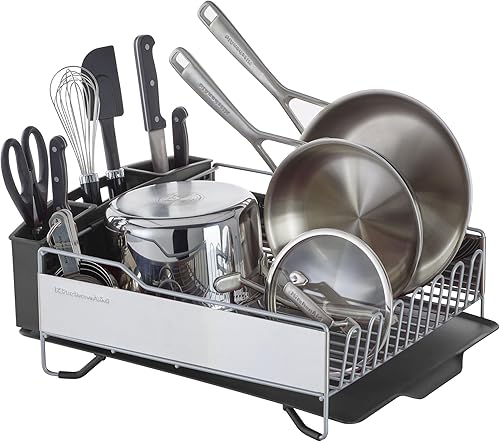
Best for: Large families needing maximum capacity and pot support
This full-size rack offers ample space for complete place settings plus larger items like pots and pans that smaller racks can’t accommodate. Heavy-duty satin-coated steel wires resist rusting through daily use. The listing advises drying the rack and drainboard after use to maintain optimal resistance.
The angled drainboard directs water straight into the sink with precise alignment to prevent pooling. Soft anti-slip feet protect smooth countertops and provide stability even when fully loaded with heavy cookware.
The removable flatware caddy features adjustable compartments and a built-in handle for carrying utensils directly to drawers without touching wet surfaces.
Its spacious design serves households generating large volumes of dishes, but the substantial footprint claims significant counter real estate permanently. Single-person households or couples washing minimal loads will find the capacity excessive. The occupied space is unjustified compared to more appropriately sized alternatives.
Check the product dimensions against your countertop before ordering. A rack meant for plates, mugs, glasses, bowls, and pans requires a clear run of space that many apartment sinks simply lack. Measure from the faucet base to the wall to confirm the board and rack align properly over your basin.
To maintain optimal rust resistance, dry the rack and drainboard after use.
Pros
- Accommodates pots and large cookware
- Angled drainboard prevents water pooling
- Removable caddy simplifies utensil unloading
- Satin coating resists rust formation
- Anti-slip feet protect counter surfaces
- Adjustable flatware sections organize silverware
Cons
- Large footprint consumes considerable space
- Requires manual drying to prevent rust
- Excessive capacity for small households
Why this one: Take this if you regularly wash full-size cookware and generate high dish volumes. The spacious design and sturdy construction handle heavy loads reliably. Avoid it if counter space is limited or household size is small. The generous dimensions become wasted space and the manual drying requirement adds maintenance that compact users shouldn’t accept.
Also worth considering are the OXO Aluminum Dish Drying Rack for straightforward rustproof performance, the 2-Tier Drying Rack Kitchen Counter if you need multi-level organization, and the Godboat 2-Tier Dish Drying Rack for integrated auto-drain functionality with included mat protection.
How to Choose Yours
Choose based on your actual washing habits and available space, not on the longest feature list or most impressive specifications. Answer these questions honestly before selecting any rack.
How much counter space can you permanently dedicate to drying? Measure first, because some racks open to seventeen inches wide while others fold flat to just 1.5 inches for cabinet storage.
Do you need to store the rack between uses or leave it out?
What’s your typical dish volume per washing session? Expandable sliding trays handle larger loads, while vertically divided designs hold fourteen plates upright plus bowls below.
Do you regularly wash large pots, pans, or baking sheets? Full-size racks accommodate bulky items, but compact tiers cannot.
Will you perform regular maintenance like oiling or special cleaning? Bamboo needs frequent mineral oil rubs, while coated steel requires drying after use to prevent rust.
Does your sink position require adjustable drainage? Swivel spouts rotate fully, but fixed boards demand precise alignment to avoid pooling.
Frequently Asked Questions
How do I know if a rack fits my counter?
Measure your available counter depth and width before purchasing, accounting for backsplash clearance and faucet reach. Compare those measurements against the product’s assembled dimensions listed in the specifications, not just marketing photos. Remember that expandable racks require additional width when extended, and drain spouts may protrude beyond the main frame footprint.
Is assembly difficult for first-time setup?
Check the product listing for specific assembly requirements before purchasing if you lack tools or patience for setup. Complex expandable mechanisms may need initial adjustment to slide smoothly, but fixed designs typically work immediately out of packaging.
How do I prevent rust or mold buildup?
Dry metal racks thoroughly after each use and ensure proper ventilation around bamboo models to prevent moisture accumulation. Follow manufacturer care instructions precisely, including any recommended treatments like mineral oil application for natural materials. Regular cleaning prevents mineral deposits and biological growth, but neglect accelerates deterioration regardless of material quality or protective coatings advertised in listings.
Are dish racks safe for sharp knives?
Only racks with dedicated knife slots or protected blade storage should hold sharp cutlery safely during drying and unloading. Placing loose knives in general utensil cups creates injury hazards when reaching into wet containers blindly. Consider hand-drying and immediate storage for extremely sharp blades rather than risking damage or accidents through air-drying methods lacking proper blade separation.
What accessories come included typically?
Included components vary significantly between models, ranging from basic single-tier frames to comprehensive sets with utensil caddies, wine holders, and drain boards. Read the complete contents list carefully rather than assuming standard inclusions based on product category alone. Some features shown in marketing images may be optional add-ons sold separately, so verify what actually ships before purchasing.
Is a counter rack worth owning at all?
Yes, if you air-dry dishes regularly and lack dishwasher capacity or prefer hand-washing certain items. Counter racks protect surfaces from water damage and organize wet items efficiently compared to spreading towels across counters. However, households using dishwashers exclusively or with minimal hand-washing needs may find dedicated drying equipment unnecessary and better replaced by occasional towel use for rare air-drying occasions.
The Verdict for Most People
Most readers should take the simplehuman Steel Frame Dishrack. Its hydrophilic tray and swivel spout solve the two most common complaints about counter drying. Those are standing water and inflexible positioning.
The moisture-control surface spreads water thinly so it evaporates without puddles or mildewy smells. The 360-degree spout rotates to drain directly into your sink no matter how you orient the rack. These features work passively every day without user intervention.
That reduces cleanup effort regardless of load size or dish type. The silicone-tipped plate dividers cradle fine china safely, while the anti-residue coating prevents hard-water mineral buildup over years of daily use.
Buyers with very small kitchens should choose the Bambüsi 2-Tier Bamboo Rack instead. It folds flat to just 1.5 inches when you’re done. That lets it slide into a cabinet or behind an appliance where counter space is tight.
Its open slat design keeps dishes upright so air reaches every side. You must wipe it dry and rub it with food-safe mineral oil often to keep it looking new.
Decide based on whether passive water management or space reclamation matters more to your daily routine.