
Is your kitchen sink area a cluttered mess that makes it hard to find what you need? You’re not alone.
Many people struggle with organizing this small but important space. Imagine opening your cabinet and instantly spotting cleaning supplies, sponges, and trash bags—all neatly arranged and easy to reach. Sounds good, right? You’ll discover simple, practical steps to transform your under-sink chaos into a clean, efficient storage zone.
Ready to reclaim your kitchen and save time every day? Let’s get started!
Credit: www.danielle-moss.com
Clear Out The Space
Clearing out the space under your kitchen sink is the first step to better organization. This area often becomes crowded with many items. Emptying it helps see what you have and what you need. It also makes cleaning easier. Start fresh to create a neat and tidy space that works for you.
Remove All Items
Take everything out from under the sink. Place items on a clean surface nearby. This step helps you view all contents clearly. It also prevents clutter from hiding in corners. Removing all items allows you to clean the cabinet thoroughly. Wipe down shelves and walls to remove dirt and spills.
Sort And Declutter
Group similar items together. For example, put cleaning supplies in one pile. Check expiration dates on products like sprays or detergents. Throw away empty or expired items. Decide what you use often and what you do not. Donate or recycle items you no longer need. Keeping only necessary items frees up space and reduces mess.
Clean Thoroughly
Cleaning under the kitchen sink is the first step to organizing it well. Dirt and spills build up over time. Removing this grime creates a fresh space for your items.
Cleaning also helps spot problems early. You can fix issues before they get worse. A clean area makes organizing easier and safer.
Wipe Surfaces
Start by clearing everything out. Use a damp cloth with mild soap. Wipe all surfaces inside the cabinet. Pay attention to corners and edges.
Dry the surfaces with a clean towel. This prevents mold and mildew growth. Clean shelves and walls thoroughly for a neat finish.
Check For Leaks
Look under the sink for any water leaks. Check pipes, joints, and the faucet base. Even small drips can cause damage over time.
Fix any leaks you find or call a plumber. A dry cabinet prevents mold and keeps items safe. Regular checks protect your kitchen and belongings.
Choose Storage Solutions
Choosing the right storage solutions makes organizing under your kitchen sink easier. Good storage helps keep everything neat and easy to find. It also protects items from moisture and spills.
Select storage that fits your space and needs. Think about what you store and how often you use it. This helps pick the best tools to keep your area tidy and functional.
Use Bins And Baskets
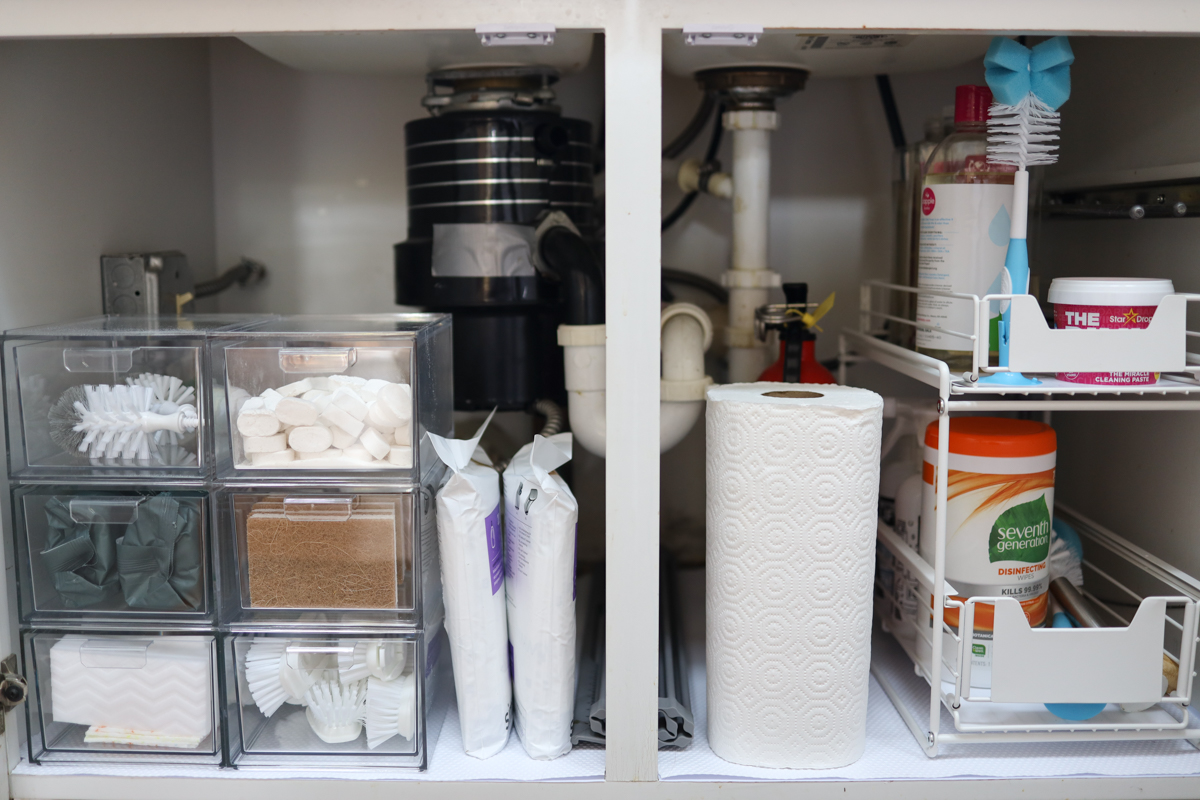
Bins and baskets create order by grouping similar items together. They stop small things from getting lost in the clutter. Clear bins let you see what’s inside without opening them. Baskets made of plastic or metal last long and are easy to clean.
Use different sizes for different items. Small bins work well for sponges and brushes. Larger baskets hold cleaning sprays and paper towels. Label each bin or basket to find things quickly. This saves time and reduces mess.
Install Shelves Or Racks
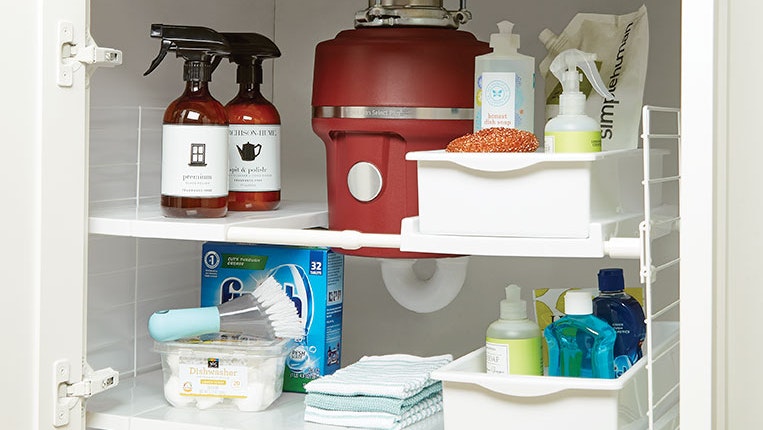
Shelves and racks add extra space under the sink. They use vertical space that often goes wasted. A small shelf can hold bottles and cans neatly. Racks with hooks help hang gloves or scrubbers.
Adjustable shelves fit different item heights. This makes storing tall bottles easy. Slide-out racks give quick access to back items. Installing these solutions keeps your sink area tidy and organized.
Maximize Vertical Space
Using the vertical space under your kitchen sink can create more room for storage. This area often goes unused, but it holds great potential. Organizing vertically helps keep items neat and easy to find. It also frees up the floor area and reduces clutter. Simple tools and containers make this task quick and effective.
Hang Hooks Or Rods
Hooks and rods are perfect for hanging cleaning tools and small items. Install a rod across the inside of the cabinet door. Use S-hooks to hang brushes, gloves, or spray bottles. This method keeps tools visible and easy to grab. It also prevents them from piling up on the cabinet floor.
Add Stackable Containers
Stackable containers use vertical space efficiently. Choose clear containers to see contents without opening them. Label each container for quick identification. Stack items like sponges, towels, and small bottles. This system keeps everything organized and saves space. It also helps maintain a clean and tidy sink area.
Organize Items By Category
Organizing items by category helps keep the kitchen sink area neat and easy to use. Grouping similar things together saves time and reduces mess. It also makes finding items quicker and cleaning easier. This simple step makes your space feel more open and tidy.
Group Cleaning Supplies
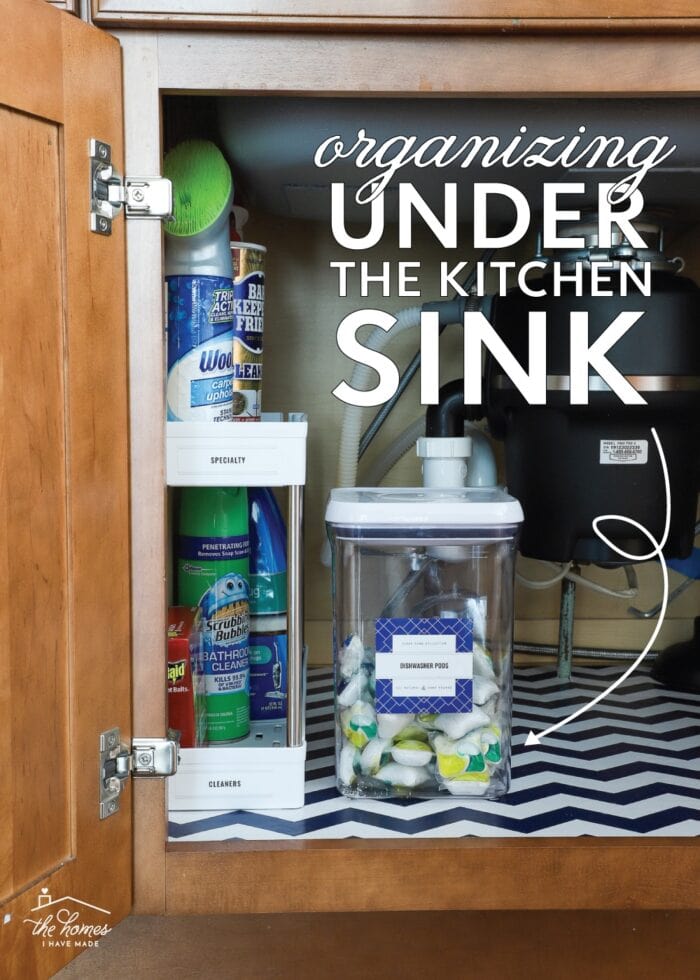
Place all cleaning products in one area under the sink. Put sprays, sponges, and brushes together. Use a small bin or basket to hold these items. This stops bottles from tipping over and spills from spreading. Label the container to find items fast. Grouping supplies keeps everything organized and ready for use.
Separate Tools And Accessories
Keep tools like gloves, scrubbers, and extra cloths separate from liquids. Use drawer dividers or small containers for these items. This prevents clutter and damage to supplies. It also helps to know exactly where each tool is. Separating accessories keeps the space clean and efficient.
Credit: thehomesihavemade.com
Label Everything
Labeling everything under the kitchen sink makes it easy to find items fast. It stops the hassle of searching through clutter. Clear labels help keep the space neat and organized.
Use Clear Labels
Choose simple, easy-to-read fonts for your labels. Use black text on a white background for the best contrast. Print labels or write them neatly by hand. Avoid fancy fonts that are hard to read. Clear labels save time and reduce confusion.
Color-code For Easy Access
Assign colors to different categories like cleaning supplies, tools, or recycling. Use colored labels or stickers to mark these groups. Color-coding helps spot items quickly at a glance. It also makes putting things back easier. This method keeps the area tidy and user-friendly.
Maintain The Order
Keeping the area under your kitchen sink neat takes effort. Organizing is not a one-time task. Maintaining order keeps the space useful and clean every day.
Small habits help stop clutter from building up again. A tidy under-sink area makes it easier to find what you need fast. It also protects cleaning supplies and tools from damage.
Regularly Review Contents
Check the items under your sink once a month. Remove empty bottles and expired products. Sort things by type, like sprays, sponges, or trash bags.
Put back only what you use. Donate or recycle extras. This keeps space free and prevents overcrowding.
Quick Daily Tidying
Spend a minute each day putting items back in place. Wipe any spills or dirt spots quickly. This small effort stops mess from growing.
Keep frequently used items easy to reach. Store less-used things in the back. Daily tidying keeps your kitchen sink area neat and ready.
Credit: www.containerstore.com
Frequently Asked Questions
How Do I Start Organizing Under The Kitchen Sink?
Begin by removing all items and cleaning the area thoroughly. Sort items into categories like cleaning supplies, trash bags, and tools. Discard expired or unused products to maximize space and efficiency.
What Storage Solutions Work Best Under Kitchen Sinks?
Use stackable bins, pull-out drawers, and tension rods to create compartments. Clear containers help you see contents easily. Adjustable shelving optimizes vertical space for better organization.
How Can I Prevent Moisture Under The Kitchen Sink?
Place moisture-absorbing products like silica gel or baking soda. Ensure pipes are leak-free and fix any drips promptly. Keep the area ventilated to reduce humidity and mold growth.
How Often Should I Organize Under The Kitchen Sink?
Organize and clean this area every 3 to 6 months. Regular maintenance prevents clutter buildup and allows you to check for leaks or expired items.
Conclusion
Organizing under your kitchen sink saves space and reduces clutter. Use bins, shelves, and hooks to keep items tidy. Group similar things together for easy access. Regularly check for expired or empty products. A clean and neat area makes daily tasks faster.
Small steps can bring big changes in your kitchen. Start today and enjoy a more organized home.