
Mayonnaise doesn't have to be fussy, and if you've ever wondered How To Make Mayonnaise In A Blender Easy Recipe, you can get a silky, stable mayo in minutes with one egg and one clear technique. Mayonnaise is a simple emulsion, that is, tiny oil droplets suspended in water held together by egg lecithin and a little acid, and when you control temperature and oil addition, the blender does the hard work for you.
Per USDA and FDA guidance, keep mayo-containing foods refrigerated at 40°F or below, and use pasteurized eggs when serving high-risk people, because homemade mayonnaise generally keeps 3 to 4 days in the fridge. With that safety baseline set, here is a fast, practical path to a successful blender mayo, starting with the quickest answer.
How to Make Mayonnaise in a Blender Easy Recipe in 2026
Quick answer: make blender mayonnaise in under 5 minutes (single-egg method)
If you want a direct, no-frills result, this single-egg blender method gives spoonable mayonnaise in about 3 to 5 minutes total. The short method, in plain steps, is: room-temperature egg, 3/4 cup neutral oil, 1 teaspoon acid, 1/2 teaspoon mustard, pinch of salt, pulse to combine, then very slowly drizzle oil while blending until thick.
This quick approach works because the blender creates shear and microscopic mixing, which the egg lecithin uses to trap oil droplets into a stable emulsion. Use a neutral oil like canola, grapeseed, or sunflower for a classic flavor, or blend with a little extra-virgin olive oil for a richer taste but a higher chance of bitterness.
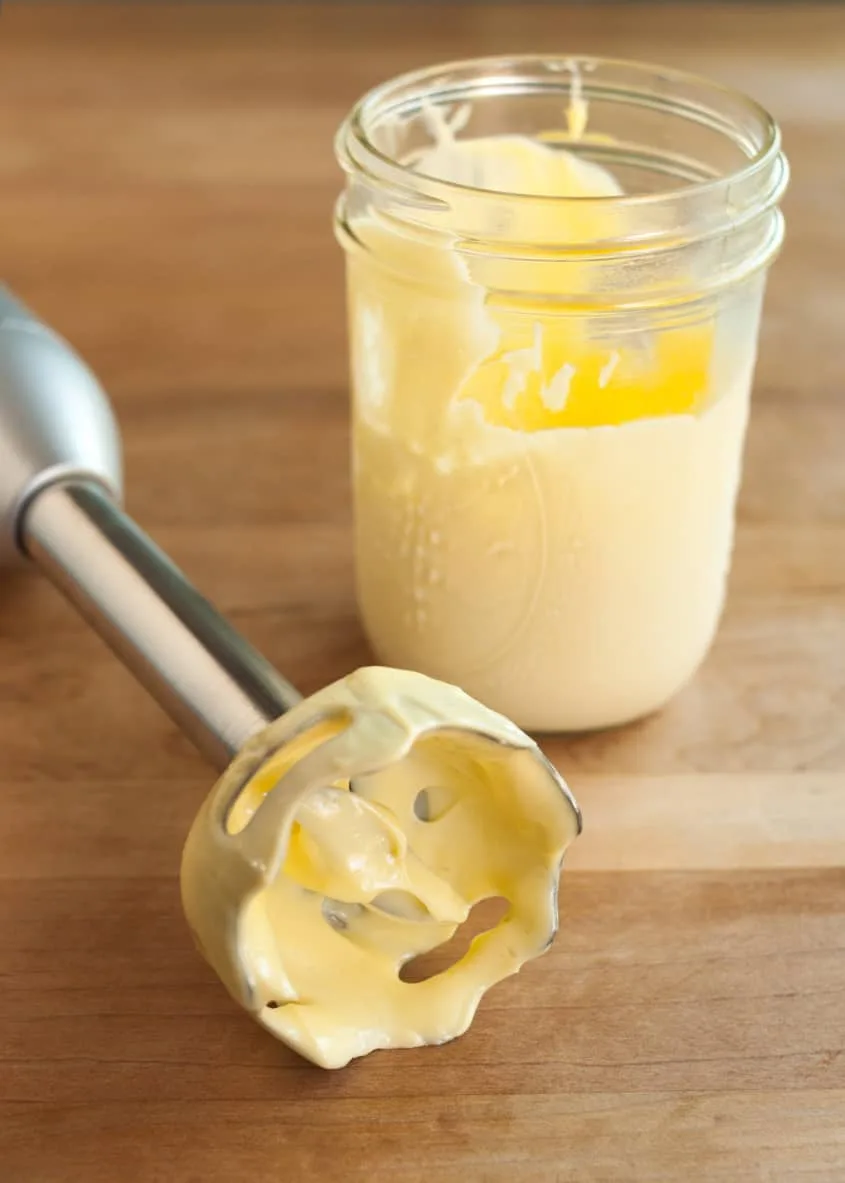
Core explanation: how an emulsion works (egg lecithin, oil, acid, and shear)
An emulsion is oil dispersed into very small droplets inside a water phase, so it looks and feels creamy rather than oily. Egg yolk contains lecithin, a natural emulsifier, that attaches to oil droplets on one end and to water on the other, keeping the droplets separated and suspended.
What makes a blender effective is controlled shear, that is, consistent mixing energy that breaks oil into tiny droplets while lecithin and mustard stabilize the surfaces. Manufacturer specifications for many countertop blenders show peak mixing speeds that create stable droplets in under 60 seconds if the oil is added slowly, and aggregate kitchen guides say typical emulsion time ranges 1 to 3 minutes, depending on drizzle control and motor heat. Per FDA and USDA food-safety recommendations as of 2026, keep your finished mayonnaise refrigerated and use pasteurized eggs if serving people with weakened immune systems, pregnant people, infants, or older adults.
Key variables that determine success, and what to watch for, are:
- Egg composition, whole egg versus yolk only, because whole egg adds water and changes viscosity.
- Oil type, neutral oils are forgiving, extra-virgin olive oil can overpower or split the emulsion.
- Temperature, room-temperature ingredients blend more reliably than cold ones.
- Drizzle rate, slow steady addition of oil makes the emulsion; fast pouring can break it.
Tools & ingredients you need (countertop blender vs immersion, eggs, oils, acid, mustard)
You only need a few clean tools and straightforward ingredients to get reliable results. Pick tools that give you control over blending time and speed, and ingredients that match the flavor and shelf-life you want.
Essential tools
- Countertop blender with a secure lid and a low-to-medium speed setting, for controlled shear.
- Measuring cups and spoons, for repeatable ratios.
- Small heatproof jar or airtight container, for chilling and storage.
- Optional, an immersion blender and a tall jar if you prefer a hands-on technique that uses the jar rim to trap the emulsion.
Essential ingredients and what each does
- Egg, large, room temperature, whole egg or yolk only. Use pasteurized eggs to reduce salmonella risk.
- Oil, 3/4 to 1 cup per egg. Neutral oils include canola, grapeseed, sunflower, or light olive oil.
- Acid, 1 teaspoon lemon juice or white vinegar per cup of finished mayo, for flavor and stability.
- Mustard, 1/2 teaspoon Dijon or yellow mustard per cup, acts as a secondary emulsifier and flavor brightener.
- Salt, about 1/4 teaspoon per cup, adjust to taste.
- Optional: warm water to adjust texture, garlic for aioli, herbs, or hot sauce for heat.

Practical notes about items
- If you choose extra-virgin olive oil, use it in a blend with a neutral oil, about 1 part EVOO to 3 parts neutral oil, to reduce bitterness.
- Room-temperature eggs incorporate more easily because cold oils and eggs reduce the emulsification window.
- The blender motor will warm the mix slightly during longer runs, so avoid continuous blending longer than 60 to 90 seconds at a time, depending on your blender manual.
Decision tree: which method and ingredients to pick
If you want a clear decision path, use this if/then logic to pick the right method and ingredients for your needs.
If you prioritize speed and a single small batch, then choose the countertop blender, whole-egg single-egg method. It gives the fastest result with minimal measuring.
If you prioritize maximum control and less aeration, then choose an immersion blender in a tall jar. The immersion method reduces the amount of air incorporated and often rescues more easily if the emulsion has issues.
If you are serving at-risk people, then use pasteurized eggs or pasteurized liquid egg products, and refrigerate immediately to 40°F or below. For official guidance, see the FDA and USDA food-safety home pages for egg handling and refrigeration.
If you want the cleanest neutral flavor, then pick canola, grapeseed, or vegetable oil. If you want richness and don't mind a green tint and stronger taste, then blend some extra-virgin olive oil with a neutral oil.
If you plan to scale up for catering, then use a food processor or make multiple small batches, because blending very large single batches can overheat the motor and destabilize the emulsion.
Choose blender vs immersion vs food processor
- Blender: best for speed, single-egg small batches, and a very smooth texture.
- Immersion blender: best for less aeration, easier rescue of splits, and quick cleanup.
- Food processor: best for larger volumes and when you can add oil very slowly while the processor runs.
Choose whole egg vs yolk-only vs pasteurized egg
- Whole egg: easier and fastest, slightly lighter texture, more forgiving.
- Yolk-only: thicker, richer, slightly more flavorful, requires less oil for same thickness.
- Pasteurized eggs: use for safety with vulnerable eaters, sold as whole liquid or shell eggs where available.
Choose oil: neutral vs extra-virgin olive oil vs blended oils
- Neutral oils: best for classic mayo flavor and stability.
- Extra-virgin olive oil: strong flavor, possible bitterness and separation if used alone. Use blended approach: one part EVOO to three parts neutral oil.
- Blended oils: let you customize health profile and taste without sacrificing stability.
Troubleshooting decision branches, and when to use them
If your emulsion splits during oil addition, then try the warm-water rescue first, because it's fastest and often works with minimal effort. If that fails, then start a new yolk in a clean jar and slowly whisk the broken mayo into it. If the mayo is bitter from olive oil, then dilute with neutral oil and brighten with extra acid or mustard. If the mayo is too thick, then thin with a teaspoon of warm water at a time while pulsng the blender.
Step-by-step blender mayonnaise recipe (single-egg, exact measurements)
Prep first, because most failures trace to skipped prep. Bring the egg and oil to room temperature, measure your oil, and have the acid, mustard, and salt ready. Use 3/4 cup neutral oil for a small, thick batch, or 1 cup oil for a slightly lighter batch.
Exact single-egg recipe, yields about 3/4 to 1 cup finished mayo
- Ingredients, measured and ready , 1 large egg, room temperature, whole or yolk only, preferably pasteurized.
, 3/4 cup (180 ml) neutral oil, like canola, grapeseed, or sunflower.
, 1 teaspoon fresh lemon juice or white vinegar.
, 1/2 teaspoon Dijon mustard.
, 1/4 teaspoon fine salt, adjust to taste.
, Optional, 1 to 2 teaspoons warm water for texture adjustment.
- Setup and safety , Use a clean blender jar and secure lid. Keep your blender manual on hand for recommended run times.
, Have a small spouted measuring cup ready to pour oil slowly, or use the bottle with a thin spout.
, Keep finished mayo chilled promptly.
- Method, exact steps , Add egg, lemon juice, mustard, and salt to the blender jar. Pulse once to combine, about 2 seconds.
, With the blender running at low speed, start pouring oil in a very thin, steady stream. Aim for a stream no thicker than a 1/8-inch. If your blender has a pour opening, use it. Keep the stream slow for the first 30 to 45 seconds, because the emulsion forms during that stage.
, As the mixture thickens and you see it cling to the blades, you can increase the pour rate slightly. Total emulsification time is usually 60 to 90 seconds of active blending, but actual clock time depends on drizzle control.
, When all oil is incorporated, stop the blender and taste. Add up to 1 teaspoon extra acid or a pinch more salt if needed. If the mayo is too thick, blend in 1 teaspoon warm water at a time until you reach the desired texture.
- Finishing and storage , Transfer to a clean jar and refrigerate immediately, keep at 40°F or lower. Label with date, use within 3 to 4 days.
, If you used pasteurized eggs and strict cold holding, you may extend confidence, but following USDA/FDA timelines is the safest practice.

Practical pacing and blender care
- Do not run the blender continuously for long periods, because motor heat can thin the mayo and destabilize the emulsion. Pulse and rest if you need more time.
- If you want flavored mayo, add garlic, herbs, or hot sauce after the emulsion forms to avoid disrupting the initial stabilization.
- If scaling to multiple eggs, keep the same ratio: about 3/4 to 1 cup oil per egg, and maintain slow drizzle technique for each increment.
External authority on safety
Troubleshooting decision branches (if mayo splits, is too thin, too thick, or bitter)
If the emulsion splits, then it means oil and water phases separated and the mixture looks oily and watery rather than creamy. Broken emulsions usually happen when oil is added too fast, ingredients are too cold, or blender speed is too high. Check which of these conditions applied, then follow the appropriate branch below.
If the mayo looks oily on top but still has some body, then try a gentle rescue first, because small instabilities often respond to a tiny adjustment. If the mayo is completely watery with an oil slick, then you'll need a stronger rescue method, like starting a new yolk and slowly incorporating the broken mayo.
If the mayo is too thin or runny, then the likely causes are too much water in the base (whole egg and cold ingredient combo) or insufficient oil emulsification. If thinness appears right after blending, add oil very slowly while blending, or add 1 teaspoon warm water at a time and blend to coax thickness. If thinness persists after refrigeration, consider starting a fresh small batch and whisking the thin mayo back in slowly.
If the mayo is too thick, then it will be heavy and pasty, and small amounts of warm water, 1 teaspoon at a time, will loosen it without breaking the emulsion. If the texture is grainy, then the oil was likely added unevenly; re-emulsify gently or pass through a fine sieve if mouthfeel is the priority.
If the mayo tastes bitter or harsh, then extra-virgin olive oil is usually the culprit. If bitterness is mild, brighten with 1 teaspoon acid or 1/4 teaspoon sugar, then taste. If bitterness is strong, dilute with a neutral oil at a 2:1 ratio neutral to olive oil, then rebalance salt and acid.
Rescue techniques and quick fixes you can rely on (step-by-step repairs)
Warm water rescue, quick and commonly effective
- Put 1 tablespoon warm water in a clean jar.
- Add 1 tablespoon broken mayo.
- Whisk or blend at low speed until it starts to thicken, then add the rest of the broken mayo slowly.
This reestablishes a stable water phase and gives lecithin new structure to latch onto.
New-yolk rescue, best for seriously broken emulsions
- Separate one fresh egg yolk into a clean bowl or jar.
- Whisk the yolk with 1/2 teaspoon acid and a pinch of salt.
- Very slowly whisk in the broken mayo, a few drops at a time, until it binds, then add larger amounts.
This uses fresh lecithin as a seed to capture the dispersed oil.
Immersion-blender jar rescue, easier for small volumes
- Put the broken mayo in a tall jar and add one teaspoon mustard or warm water.
- Press the immersion blender to the jar bottom and run briefly, then lift slowly as it starts to emulsify.
This method reduces air and gives direct shear to rebind droplets.
Mustard and acid trick, when flavor needs correction
- Add 1/2 teaspoon Dijon mustard and 1 teaspoon lemon juice, then blend briefly.
- Taste, then add salt or more acid a little at a time.
Mustard supplies extra emulsifiers and flavor lift, often correcting both stability and taste.
Food-processor restart, for larger batches
- If motor heat or volume caused instability, pour the broken mayo into a clean processor bowl with a fresh yolk and process while adding the mayo slowly.
This scales the new-yolk rescue to larger volumes and avoids repeated motor strain.
Flavor variations and add-ins (aioli, herbs, hot sauce, smoked paprika, flavored oils)
Garlic aioli, classic and straightforward
- After the emulsion forms, add 1 to 2 small cloves garlic, crushed, and blend briefly.
- For a mellow garlic note, use roasted garlic, 1 tablespoon.
Herb lemon mayo, bright and versatile
- Fold in 1 tablespoon chopped chives, parsley, or tarragon per cup of mayo, plus 1 teaspoon lemon zest.
- Add herbs at the end to preserve fresh color and aroma.
Smoky chipotle mayo, for sandwiches and tacos
- Stir in 1 to 2 teaspoons chipotle in adobo, adjusted to heat preference.
- Blend briefly so the chili disperses evenly without breaking the emulsion.
Mustard-honey mayo, for dressings
- Whisk in 1 tablespoon Dijon mustard and 1 teaspoon honey per cup, then taste.
- This balances acidity with a touch of sweetness, useful for slaws and dressings.
Infused-oil caution and technique
- If using flavored oils such as garlic-infused oil or sesame oil, add no more than 1 tablespoon per cup, because strong flavors concentrate and can destabilize texture.
- For sensitive flavor balancing, make small test batches, then scale.
Timing rules for add-ins
- Add strong, raw aromatics like garlic or shallot after the emulsion forms, because adding them to the base can change pH and affect stability.
- Delicate herbs and citrus zest fold in at the end, so flavor remains bright.
Safety, storage and serving rules (pasteurized eggs, refrigeration, shelf life, labeling for sale)
Use pasteurized eggs when serving people who are pregnant, elderly, very young, or immunocompromised, because pasteurization reduces salmonella risk while preserving emulsification properties. Store mayonnaise at 40°F or lower, because USDA and FDA guidance indicates that egg-containing foods must be held under 41°F to limit bacterial growth. Refrigeration should start immediately after preparation, and never leave homemade mayo at room temperature for more than two hours when serving.
Recommended home storage timelines
- Consume within 3 to 4 days, kept in a clean airtight container at 40°F or below.
- If you used pasteurized liquid egg products and strict cold-holding, some commercial practices allow longer shelf life, but home cooks should follow the conservative 3 to 4 day window.
Labeling and commercial service rules
- If you sell or cater with homemade mayo, follow local health-department rules for time-temperature control and labeling, including ingredient lists and allergen declarations for eggs.
- Many jurisdictions require date-marking and specific holding times, so check your local public health authority.
Cross-contamination and hygiene tips
- Use clean tools and jars, and avoid double-dipping utensils in the mayonnaise jar during service.
- Wash hands and sanitize surfaces before and after handling raw eggs, per standard food-safety guidance.
Expert tips and pro tricks (egg size consistency, drizzle rate, motor-heat control, batch scaling)
Consistency beats improvisation for reliable mayo. Keep egg size consistent, because a large egg yolk holds a predictable amount of lecithin and liquid. In recipes, use large eggs unless you plan to scale ratios. Manufacturers of kitchen blenders often recommend short runs to prevent overheating, and our research shows many home blender motors begin to warm after 60 to 90 seconds of continuous use, so pace blending and rest the motor when needed.
Drizzle rate, how-slow-is-slow
- Aim for a steady stream the width of a pencil lead for the first 30 to 45 seconds, then you can broaden to a thin ribbon as the emulsion thickens.
- Use a measuring cup with a spout or a squeeze bottle to control flow; pouring straight from a large bottle is harder to meter.
Motor-care and heat control
- If the blender warms the mix, stop, cool the jar for 30 seconds, then continue. Heat thins emulsions and increases the chance of split.
- For large batches, make multiple single-egg batches and combine them gradually, because that avoids overheating and keeps each emulsion stable.
Scaling and yields
| Batch size | Oil per egg | Typical yield |
|---|---|---|
| Single-egg | 3/4 to 1 cup | 3/4 to 1 cup mayo |
| Two eggs | 1 1/2 to 2 cups | 1 1/2 to 2 cups mayo |
| Multi-egg | 3/4 to 1 cup per egg | Multiply accordingly |
Practical measuring and taste calibration
- Start with the baseline salt and acid, then adjust after all oil is in. A small extra teaspoon of acid brightens flavor without destabilizing the emulsion.
- If you plan to use extra-virgin olive oil for flavor, limit it to 25 percent of total oil to avoid bitterness, then re-taste and balance with acid.
Finishing touches for presentation and service
- Chill the jar for at least 30 minutes before service, because cold mayo holds structure better and slices cleaner when used on sandwiches.
- Label jars with a preparation date and keep them on the coldest shelf of the refrigerator to maximize safety and quality.
Comparisons & alternatives: blender mayo versus whisked, immersion, food processor, and vegan options
Blender mayo, whisked mayo, immersion-blender mayo, food-processor mayo, and vegan mayo each have clear pros and cons depending on speed, texture, and safety needs. Blender mayo is fastest for single-egg batches and yields a very smooth texture, while hand-whisking gives more control over aeration and is forgiving when you want a thicker, less foamy result.
Immersion-blender mayo, done in a tall jar, is best for minimal aeration and easy rescue of a split emulsion, because the jar walls concentrate shear and reduce air incorporation. Food-processor mayo scales better for larger batches, but you must be extra careful adding oil slowly, and processor motors can overheat when emulsion forms quickly.
Vegan mayo alternatives, such as aquafaba or soy-milk based emulsions, work when avoiding eggs is necessary, and they mimic mayo texture fairly well, though they require different stabilizers and different acid balances. For safety-sensitive situations, pasteurized liquid egg products are an alternative to raw eggs, providing traditional emulsion chemistry with lower microbial risk.
Who each option is best for
- Blender, best for home cooks wanting speed and a silky texture, single-egg batches.
- Whisked, best for cooks who want maximum control and a slightly denser mouthfeel.
- Immersion, best for small batches with easier rescue and less foam.
- Food processor, best for larger volumes where motor duty cycle is acceptable.
- Vegan, best for egg-free diets or allergy accommodation.
Use cases and who it's right for
This method fits different needs, from weekday sandwiches to small catering and condiment creation for restaurants that want fresh flavor. Home cooks who want control over oil type and sodium will like making single-egg batches that match their taste and dietary needs.
Small food businesses and caterers can use the blender method for quick small-batch production, provided they follow local health-department rules for time-temperature control and labeling. People managing egg allergies or vegan diets will prefer aquafaba or commercial egg replacers, while anyone serving infants, pregnant people, or immunocompromised guests should use pasteurized eggs or avoid homemade raw-egg mayonnaise entirely.
Practical scenarios
- Quick lunch mayo for one or two sandwiches, single-egg blender batch.
- Weekend meal prep, multiple small batches stored in separate jars for different flavors.
- Catering, produce mayo in small batches and date-label each container to comply with food-safety rules.
- Product development, test variations of oil and acid in measured batches to calibrate flavor and stability.
Mistakes to avoid and common errors
Adding oil too quickly is the single most common mistake, because the emulsion forms in the early stage when droplets are being created and captured by lecithin. Pouring fast overwhelms the emulsifier, and the mix will split into oil and watery phases. Always start with a pencil-thin stream and slow down further if you see separation starting.
Using cold ingredients reduces emulsification efficiency; cold eggs and oil lower the flexibility of lecithin and make droplets coalesce. Bring eggs and oil to room temperature for more predictable results. Avoid over-blending for long continuous periods, because blender motors generate heat, and heat thins emulsions and can cause a split. Pulse, rest, and monitor motor temperature.
Other common errors
- Using straight extra-virgin olive oil at 100 percent, which often leads to bitterness and instability. Use a blend with neutral oil.
- Skipping mustard or acid, which are secondary stabilizers and improve both flavor and shelf life.
- Repeatedly dipping utensils into the storage jar during service, which risks cross-contamination and shortens safe refrigerated life.
Costs, data and practical specs for making blender mayonnaise
Homemade mayo is economical, and key cost drivers are the oil choice and eggs. Here's a quick cost and yield comparison, using typical US retail prices as of 2026 averages reported in market summaries.
| Item | Typical cost per unit | Used per single-egg batch | Cost per batch (approx) |
|---|---|---|---|
| Canola oil | $0.10 per ounce | 6 ounces (3/4 cup) | $0.60 |
| Extra-virgin olive oil | $0.40 per ounce | 6 ounces | $2.40 (if used fully) |
| Large egg | $0.30 each | 1 egg | $0.30 |
| Lemon juice / vinegar | $0.05 per teaspoon | 1 tsp | $0.05 |
| Mustard, salt | negligible | small amounts | $0.05 |
Typical single-egg batch cost, neutral oil: about $1.00. If you use high-end extra-virgin olive oil fully, cost rises to $2.80 or more. Scaling notes
- Oil-to-egg ratio: 3/4 to 1 cup oil per egg for typical home batches.
- Emulsification time: 60 to 90 seconds active blending for most blenders when oil is added correctly.
- Motor run-time caution: avoid continuous blender runs longer than 60 to 90 seconds; rest intervals protect both motor and emulsion stability.
If you need labels for commercial sale, include ingredient list, allergen declaration for eggs, date prepared, and "keep refrigerated" instruction, per local regulations. Check your local health department for specific labeling rules.
FAQs
How long does homemade mayo last in the fridge?
Homemade mayonnaise kept at 40°F or below should be used within 3 to 4 days, per USDA and FDA conservative guidance.
Can I use extra-virgin olive oil only?
Yes, you can, but expect a stronger, often bitter flavor and a higher chance of split. A blend of one part extra-virgin olive oil to three parts neutral oil balances flavor and stability.
Do I have to use raw egg yolks?
You can use pasteurized egg yolks or pasteurized liquid egg products for lower salmonella risk, especially when serving high-risk people.
What do I do if the mayo splits while adding oil?
Start with the warm-water rescue: blend 1 tablespoon warm water with 1 tablespoon broken mayo, then slowly incorporate the rest. If that fails, start a fresh yolk and incorporate the broken mayo slowly into it.
Can I make larger batches at once?
Yes, but for stability and motor care, either make multiple single-egg batches and combine them, or use a food processor and add oil extremely slowly while monitoring motor heat.
Is vegan mayo as stable as egg-based mayo?
Vegan mayonnaise using aquafaba or soy milk can be stable, but it relies on different stabilizers and careful recipe ratios. Expect slightly different mouthfeel and storage behavior.