
If you’ve ever faced the challenge of brewing coffee for a large group, you know how tricky it can be to get the right amount of coffee for a 100 cup coffee maker. Too little, and your coffee tastes weak; too much, and it can be bitter or wasteful.
You want every cup to be just right—full of rich flavor and perfect strength. You’ll discover the simple, foolproof way to measure your coffee so you can serve delicious coffee every time, whether it’s for a big meeting, a party, or your busy café.
Keep reading to find out exactly how much coffee you need for your 100 cup coffee maker and never worry about your brew again.

Credit: www.amazon.com
Coffee Maker Capacity Basics
Understanding the basics of coffee maker capacity helps you brew the right amount. It matters for taste and avoiding waste. Knowing how much coffee to use for a 100 cup coffee maker is key.
Capacity depends on how a “cup” is defined and the size of the coffee maker. This knowledge makes your brewing easier and more consistent.
What Defines A Cup In Coffee Making
A coffee cup is smaller than a regular measuring cup. Most coffee makers count one cup as 5 to 6 ounces. This is less than the 8-ounce cup used in cooking.
Knowing the size helps you measure coffee and water properly. It keeps coffee strong and balanced. Using the wrong cup size causes weak or bitter coffee.
Standard Coffee Maker Sizes
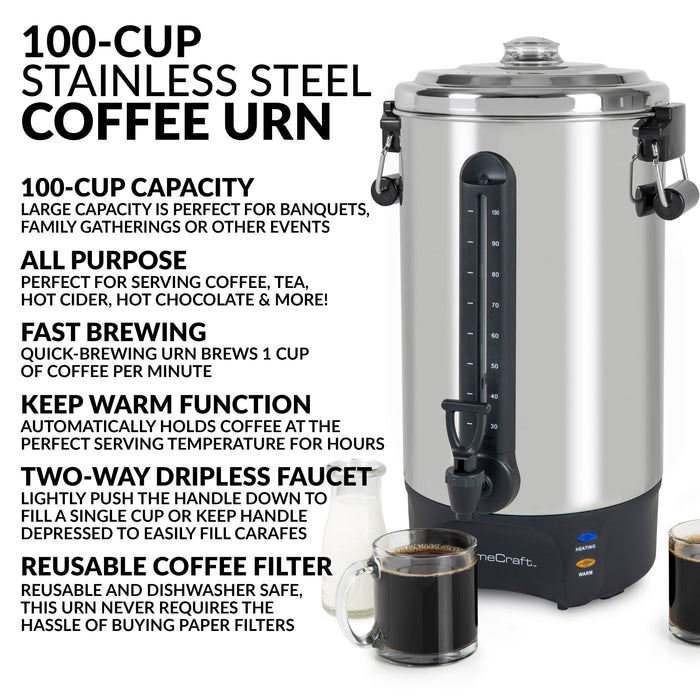
Coffee makers come in many sizes: 4, 8, 12, and even 100 cups. The 100 cup coffee maker is made for large groups or offices. It brews a lot of coffee at once.
Choosing the right size depends on your needs. Big machines need more coffee grounds and water. Small machines use less. Matching size and amount saves time and money.
Credit: nostalgiaproducts.com
Calculating Coffee Amounts
Calculating the right amount of coffee for a 100 cup coffee maker is important. Too much coffee can make the brew bitter. Too little results in weak coffee. Getting the balance right ensures a perfect cup every time.
Understanding the coffee to water ratio and how to measure coffee helps. This section breaks down the essentials to guide you step by step.
Coffee To Water Ratio Essentials
The coffee to water ratio is the key to good coffee. A common ratio is 1:15, meaning one part coffee to fifteen parts water. For example, 1 gram of coffee for every 15 milliliters of water.
This ratio can change based on taste. Some prefer stronger coffee, others milder. But starting with 1:15 is a safe bet for most brewers.
Measuring Coffee For 100 Cups
A 100 cup coffee maker usually means 100 six-ounce servings. That equals about 600 ounces of water or 17.7 liters.
Using the 1:15 ratio, you need about 40 ounces (1.13 kilograms) of ground coffee. This amount makes sure the coffee is strong and flavorful.
Use a kitchen scale for accurate measurement. Scoops can vary, so weighing coffee is better for consistency.
Types Of Coffee Grounds
Coffee grounds come in different sizes. Each size affects the brewing process. Choosing the right grind can improve taste and strength. It also helps the coffee maker work well.
For a 100 cup coffee maker, the grind size matters a lot. The machine uses a lot of water and coffee. Using the correct grind size makes sure the coffee brews evenly and tastes great.
Ground Size Impact On Brewing
Coarse grounds have large particles. They brew slowly and give a mild taste.
Medium grounds have smaller particles. They balance speed and flavor well.
Fine grounds are very small. They brew fast and give a strong, bold flavor.
Too coarse or too fine can cause problems. Coffee may be weak or bitter. It can also clog the machine or make brewing slow.
Choosing The Right Grind For Large Batches
For large batches, medium grind works best. It lets water flow evenly through the coffee.
Fine grind may cause over-extraction and bitterness. Coarse grind may result in weak coffee.
Test the grind size with your coffee maker. Adjust until the taste is just right.
Using the right grind size saves coffee and time. It also makes the coffee taste fresh and smooth.
Brewing Tips For Large Coffee Makers
Brewing coffee in a large coffee maker needs care and attention. Using the right amount of coffee and water helps make the perfect pot. Small mistakes can change the taste a lot. These tips help you get the best flavor from your 100 cup coffee maker.
Ensuring Even Extraction
Even extraction means all coffee grounds get water equally. Stir the grounds gently before brewing to spread them out. Use medium grind size for best water flow. Avoid packing the coffee too tight. This helps water pass through evenly and extract good flavor.
Avoiding Over Or Under Brewing
Over brewing makes coffee bitter and strong. Under brewing causes weak, sour taste. Follow the coffee maker instructions for water and coffee amounts. Use a kitchen scale to measure coffee correctly. Set the right brew time to get balanced taste every time.
Adjusting For Strength Preferences
Adjusting the strength of your coffee is key to enjoying every cup from a 100 cup coffee maker. Different people like coffee in various ways. Some want it bold and rich. Others prefer it smooth and light. Understanding how to change the amount of coffee grounds helps you get the taste you want.
Making Stronger Coffee
Use more coffee grounds than usual. For a 100 cup coffee maker, increase the coffee amount by 10 to 20%. This makes the coffee richer and more powerful. Stir the grounds gently before brewing. This helps release more flavor. Avoid using too much coffee, as it can taste bitter.
Lightening The Brew
Use less coffee grounds for a mild taste. Reduce the coffee amount by about 10 to 20%. This creates a softer, lighter cup. You can also use a coarser grind to make the coffee less strong. Light coffee is perfect for those who want a gentler caffeine boost.

Credit: www.amazon.com
Maintaining Your Coffee Maker
Maintaining your 100 cup coffee maker is key to great coffee every time. Regular care keeps your machine working well and your coffee tasting fresh. Neglecting maintenance can lead to poor flavor and machine damage.
Cleaning After Large Batches
After brewing a large batch, clean the coffee maker promptly. Remove used grounds and rinse the basket. Wipe the machine’s exterior with a damp cloth. Run a cycle with just water to flush out coffee residue. This prevents old coffee from affecting new brews.
Preventing Build-up For Better Taste
Mineral deposits from water can build up inside your coffee maker. These deposits hurt the taste and reduce machine efficiency. Use a mixture of vinegar and water to descale the machine monthly. Let it sit for 15 minutes, then rinse well. Clean parts regularly to avoid clogs and keep flavors pure.
Frequently Asked Questions
How Much Coffee Grounds For 100 Cups?
For 100 cups, use roughly 1. 5 to 2 pounds of coffee grounds. This depends on brew strength and cup size. Typically, one cup requires one to two tablespoons of grounds. Adjust accordingly for stronger or weaker coffee.
What Is The Ideal Coffee-to-water Ratio?
A standard coffee-to-water ratio is 1:16. This means 1 gram of coffee per 16 grams of water. For large brewers, measuring by weight ensures consistent taste. Adjust the ratio for personal preference or coffee type.
How Many Tablespoons Per Cup In Large Coffee Makers?
Use 1 to 2 tablespoons of coffee grounds per 6-ounce cup. For a 100-cup maker, multiply accordingly. Measuring tablespoons helps maintain a balanced flavor. Avoid overfilling to prevent bitter coffee.
Can Grind Size Affect Coffee Amount Needed?
Yes, grind size impacts extraction and required coffee amount. Finer grinds extract more quickly, needing less coffee. Coarser grinds need more grounds for full flavor. Adjust grind size to suit your coffee maker and taste.
Conclusion
Making coffee for a 100 cup coffee maker needs the right amount of grounds. Too little coffee makes weak drinks. Too much coffee can taste bitter. Usually, use about 1 to 1. 5 cups of coffee grounds for 100 cups of water.
Adjust to your taste. Measuring carefully helps you get good flavor every time. Enjoy your coffee break with confidence and ease. Brewing large amounts doesn’t have to be hard. Just follow simple steps for the perfect pot.