
Mix 1 part white vinegar with 2 parts water and run it through your machine instead of coffee. The full job takes about 45 minutes, and most of that’s waiting. You’ll flush the vinegar solution through the group head and steam wand, let it sit, then rinse twice with clean water so no sour taste reaches your next shot.
What You’ll Need Before You Start
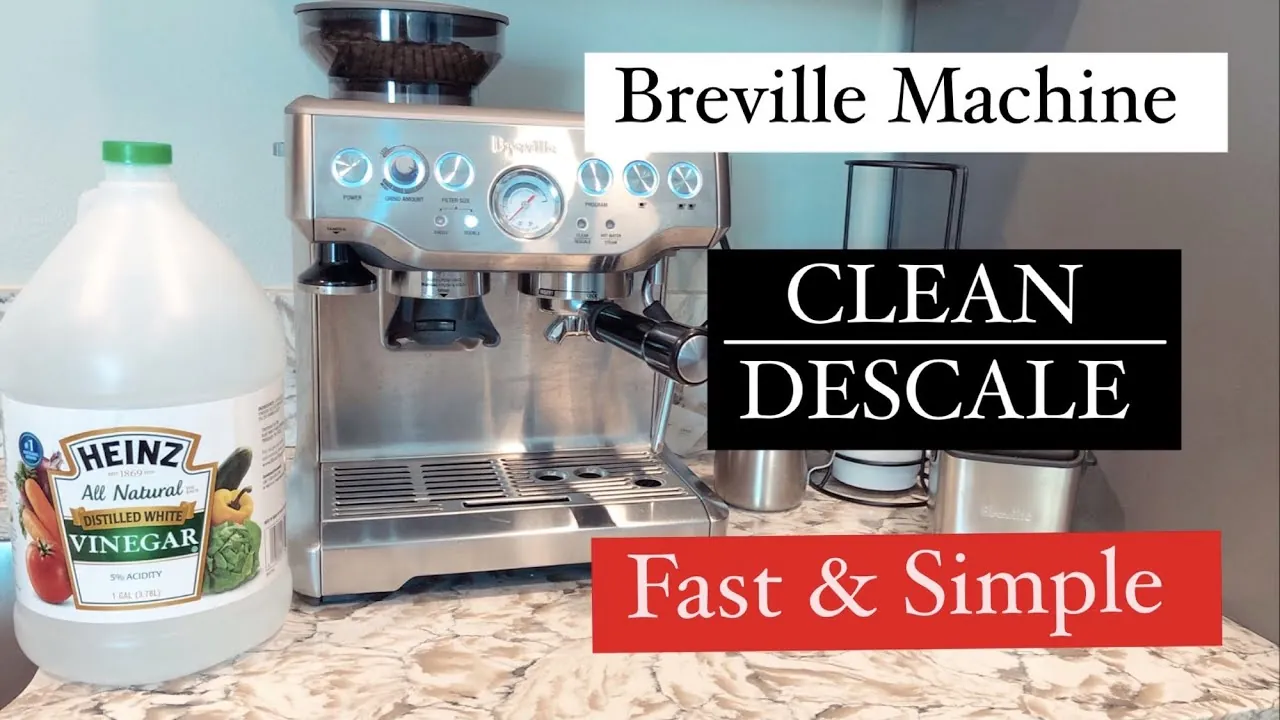
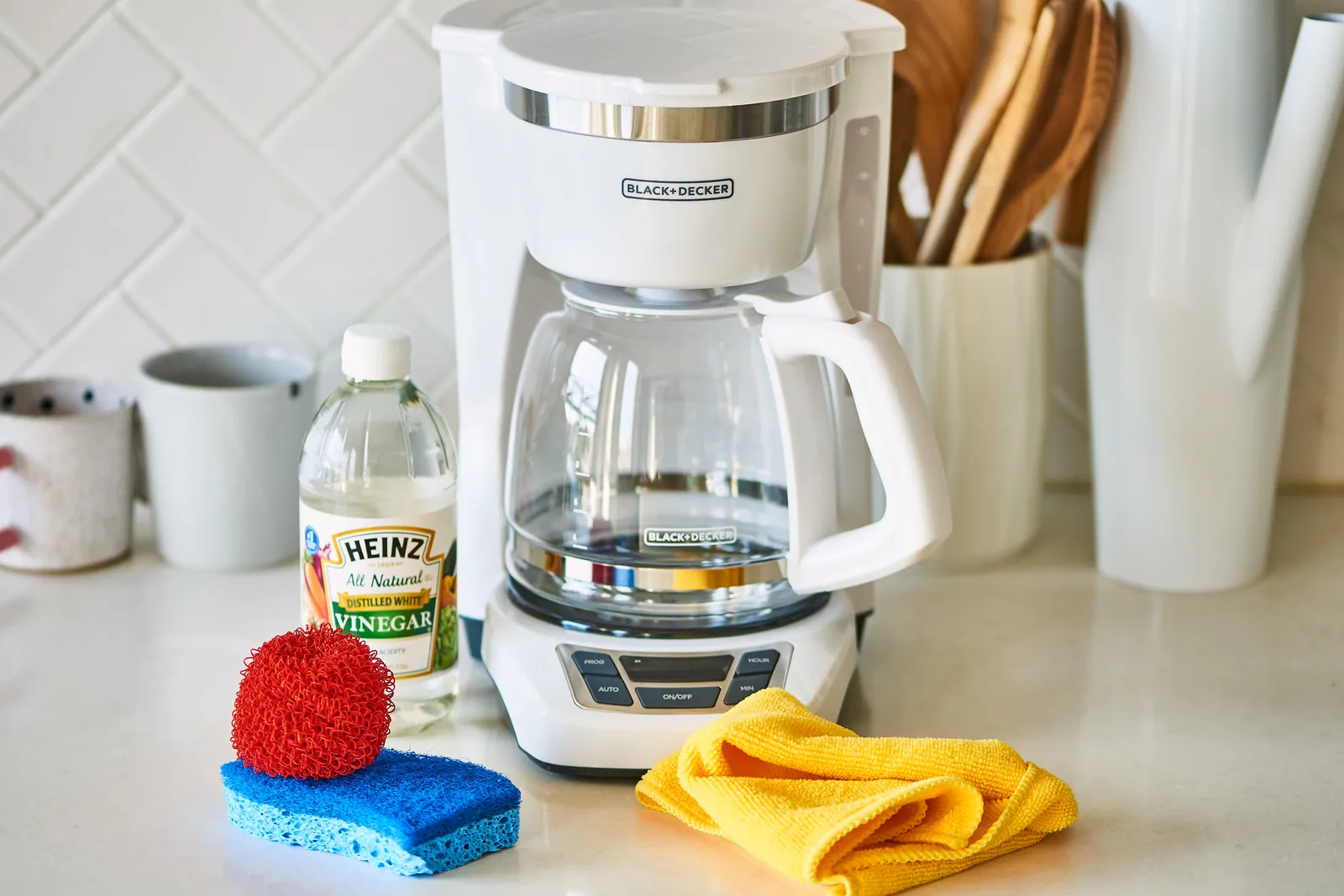
Gather these first, because stopping halfway through leaves vinegar sitting inside the boiler:
- White distilled vinegar — the cheap clear kind, not balsamic or apple cider
- Cold water for mixing and rinsing
- A small bowl or pitcher for the steam wand
- A clean cloth or soft brush for the group head and basket
- Your machine’s manual, if you still have it
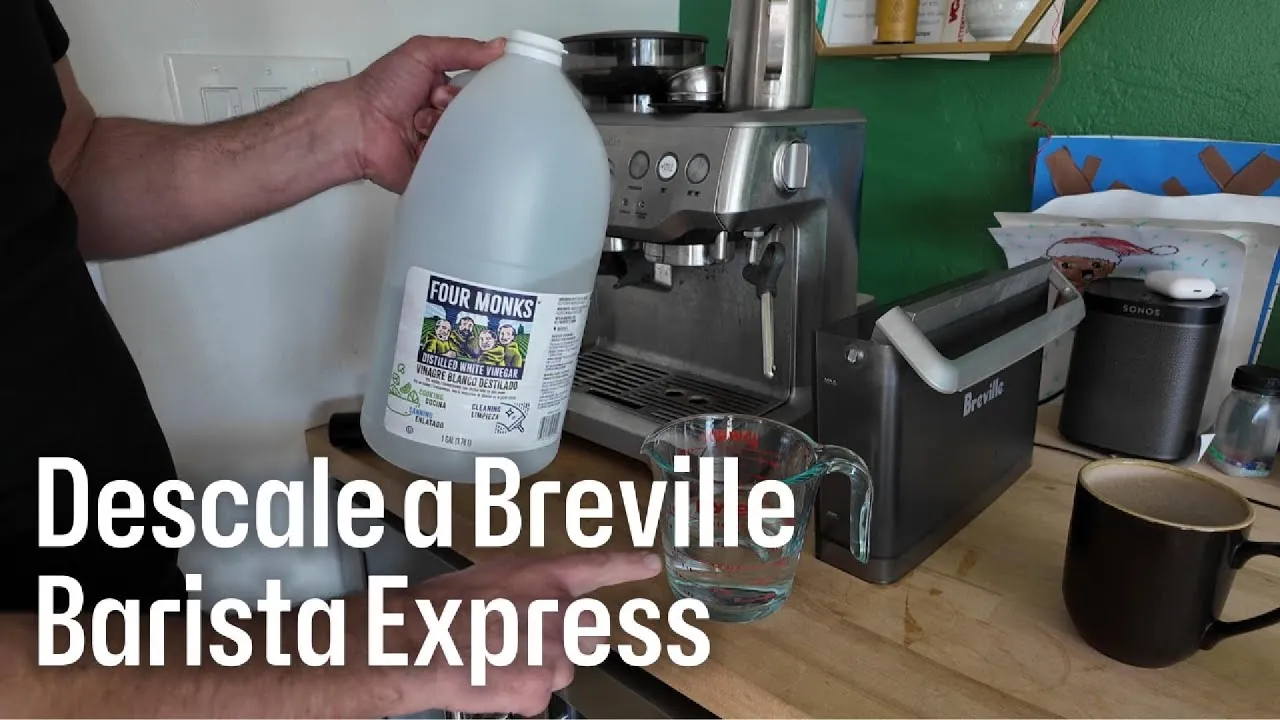
One thing to check before anything else: some manufacturers say vinegar voids the warranty on their machines. Breville, for example, tells owners to use a dedicated descaling solution instead. Look up your own model’s instructions, or check the maker’s website, before you pour.
Tip: If your manual says no vinegar, use the descaler the maker sells. The steps below stay the same — only the liquid changes.
Work through these in order. Don’t rush the soaking steps; that’s where the vinegar actually breaks down the mineral buildup.
Empty and cool the machine. Turn it off, unplug it, and let it cool down. Pull out the water tank, dump the old water, and rinse the tank.
Mix the solution. Pour 1 part white vinegar into the tank, then add 2 parts cold water. For most home machines, that’s about 1 cup of vinegar to 2 cups of water.
Run a brew cycle. Put a cup under the group head and start a shot without coffee in the basket. Let the whole cup fill, then stop. This pulls the solution through the pump and the group.
Let it sit for 20 minutes. Leave the solution inside the machine. This is the part that dissolves the scale you can’t see. Don’t skip it to save time.
Run the steam wand. Put the wand tip in a bowl and open the steam valve for about 10 seconds. Close it, wait 10 seconds, then open it again. Repeat this 3 or 4 times so the solution reaches the wand.
Flush with clean water. Empty the tank, rinse it well, and fill it with plain cold water. Run 2 full tanks through the group head and the wand. This clears the vinegar so it can’t flavor your coffee.
Clean the parts by hand. Scrub the portafilter basket, the group head screen, and the drip tray with warm water and a little dish soap. Vinegar in the tank doesn’t touch these.
Run one test shot. Pull a shot with no coffee and taste a drop. If it’s sour, flush one more tank of water through.
How Long Does the Whole Job Take?
Plan on about 45 minutes from start to finish. The table below shows where that time goes, plus how the numbers shift for different machine types.
| Step | Time | Notes |
|---|---|---|
| Mixing and setup | 5 minutes | 1 part vinegar to 2 parts water |
| First brew cycle | 3-5 minutes | Until the cup fills |
| Soaking | 20 minutes | Don’t shorten this |
| Steam wand cycles | 5 minutes | 3-4 open-and-close rounds |
| Clean water flush | 8-10 minutes | 2 full tanks |
| Hand cleaning | 5 minutes | Basket, screen, drip tray |
| Machine type | Vinegar to water | Flush tanks needed |
|---|---|---|
| Basic pump machine | 1:2 | 2 |
| Machine with a boiler | 1:2 | 2-3 |
| Super-automatic | Check manual first | 3 |
Is Vinegar Safe for Your Espresso Machine?
Yes, for most home machines — but not all of them. Vinegar is a mild acid, and that’s exactly why it works on mineral scale. The same acid can slowly damage rubber gaskets and seals if you use it too often or leave it in too long.
The safe rule is simple: descale with vinegar every 3 to 6 months, and always rinse thoroughly afterward. If you live in a hard-water area, lean toward the shorter end of that range. If your water is soft, you can stretch it out.
Never leave vinegar sitting in the machine overnight. A 20-minute soak does the job. Longer than that gives the acid more time to work on the seals than on the scale.
Signs Your Machine Actually Needs Descaling
You don’t need a calendar to tell you it’s time. The machine shows you.
- Your shots taste bitter or sour even with fresh beans
- The water flow from the group head looks weak or uneven
- The pump sounds louder or rougher than usual
- You see white crusty spots around the steam wand or group head
- The machine takes longer to heat up than it used to
If you spot 2 or more of these, descale now rather than waiting for your usual schedule.
Mistakes That Make It Worse
Can You Use Apple Cider Vinegar Instead?
No. Apple cider vinegar leaves color and residue behind, and it can stain internal parts. Use plain white distilled vinegar only. The clear kind leaves nothing behind once you flush it out.
Why Does My Coffee Still Taste Like Vinegar?
You didn’t flush enough clean water through. Two full tanks is the minimum, and machines with a boiler often need 3. Run another tank and taste a plain water shot again. Don’t brew real coffee until the water tastes neutral — otherwise you’ll waste good beans on a sour shot.
Should You Run Vinegar Through the Steam Wand?
Yes, but briefly. The wand has narrow openings where scale builds up fast. Cycling the valve open and closed for a few seconds at a time pushes the solution through without letting it sit in the rubber seals too long.
What Happens If You Skip Descaling?
The scale keeps building, and the machine has to work harder to push water through. Over time that shortens the machine’s life and can lead to a repair that costs a large share of a new machine. It’s one of those jobs where a little effort now saves a bigger problem later.
When to Call a Professional Instead
If your machine is still under warranty, check the manual before you do anything — using vinegar when the maker says not to can void your coverage. That’s the one situation where the answer isn’t “do it yourself.”
For anything involving the internal pump, the heating element, or opening the casing, stop. Those parts carry a shock risk even after unplugging, and they’re a job for a qualified technician. Your part of the job ends at the tank, the group head, and the wand.
Related guides
Frequently Asked Questions
Can I use vinegar on a super-automatic espresso machine?
Usually not without checking first. Super-automatic machines have more internal seals and sensors than basic models, and several makers require their own descaler. Look up your exact model in the manual, or contact the manufacturer, before you run vinegar through it.
How often should I descale with vinegar?
Every 3 to 6 months for most home machines. If your water is hard, descale closer to every 3 months. If you use filtered or soft water, you can wait longer. Watch for weak flow and bitter shots as your real signal.
Is it OK to use vinegar every week?
No. Weekly vinegar is too harsh on the rubber gaskets and seals. Once every few months is enough for descaling. For daily care, just rinse the basket and flush the group head with plain water.
What’s the ratio of vinegar to water?
Use 1 part white vinegar to 2 parts water. That’s strong enough to break down scale but gentle enough not to damage the seals during a short soak. Don’t use straight vinegar — it’s harder on the internal parts.
Can I drink the first shot after descaling?
No. Throw away the first shot or two after descaling. Even after a full flush, a little vinegar can stay in the lines. Taste a plain water shot first, and only brew real coffee once the water tastes clean.
Does vinegar damage the machine’s boiler?
Not in a short soak at a 1:2 mix. Long soaks and frequent use are what cause trouble. Keep the soak to 20 minutes, flush well, and descale only every few months.
One Last Thing to Check
Before your next descale, look up your machine’s model number and find the maker’s own cleaning page. That single check tells you whether vinegar is allowed, what ratio they prefer, and how many flush cycles your machine needs. It takes two minutes and saves you from a repair you didn’t plan for.