
Best Water Filter For Brewing Beer: Inline 80–150 mesh filters and carbon housings excel.
I’ve spent years brewing in a small garage and a micro setup. I know hard water, chlorine, and particulates can wreck a mash or dull hop aroma. The right filter makes water predictable, clean, and repeatable. If you want cleaner taps and better beer, you need a simple, reliable Best Water Filter For Brewing Beer that fits your gear and budget.
Inline Beer Filter 100 Mesh (150 Micron)

I use this inline 100 mesh filter when I want a simple strainer for siphon lines or transfer. It blocks larger hop and grain debris well, so I get fewer clogs and less trub in my fermenter. The plastic T design slips into 3/8″ lines easily and it holds up to repeated cleaning.
The 150 micron screen suits most homebrew needs. It does not remove chlorine or dissolved solids, so I pair it with carbon when water chemistry matters. Still, for quick transfers and keeping kegs clean, this Inline Beer Filter 100 Mesh (150 Micron) is solid and cheap.
Pros:
- Easy to install inline in siphon or pump lines
- Catches hops and grain husks before fermenter
- Durable plastic resists beer acids and cleaners
- Simple to clean by backflushing or soaking
- Low cost makes it easy to keep spares
- Good flow rate for gravity feeds and pumps
Cons:
- Does not filter dissolved chemicals like chlorine
- Not fine enough for very hazy beers or polishing
- Plastic fittings can wear if overtightened
My Recommendation
I recommend this model to brewers who need a cheap, robust inline pre-filter during transfers. It is best for hobbyists who do gravity siphons, keg fills, and quick racking. I find it saves time by preventing line clogs and reduces the chance of topping fermenters with debris.
Pair this Inline Beer Filter 100 Mesh (150 Micron) with a carbon filter or water softener when you need true water conditioning. For the price, it adds reliability to brewing day and lowers the risk of infection or off-flavors caused by solids.
| Best for | Why |
|---|---|
| Quick transfers | Stops hops and grain husks from clogging lines |
| Budget brewers | Low cost and easy to replace |
| Gravity siphons | Fits 3/8″ lines and keeps flow smooth |
Inline Beer Filter 80 Mesh (180 Micron)
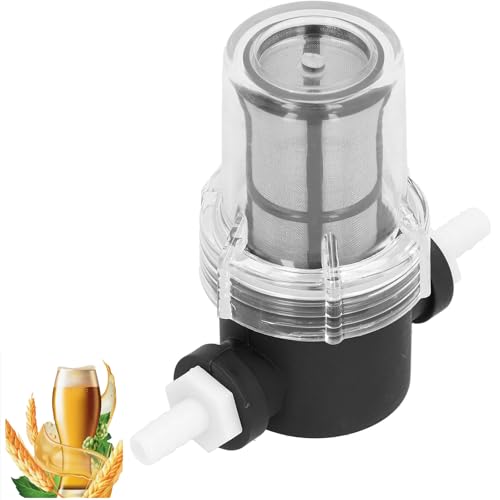
This 80 mesh inline filter gives a slightly coarser screen than the 100 mesh. I use it when I need higher flow or when my wort contains a lot of big particulates. It reduces clogging risk while still catching most unwanted solids during transfer.
The 180 micron rating balances flow and filtration. If you use pumps or long tubing, the 80 mesh helps maintain pressure and reduces pump strain. This filter does not change the water chemistry, so it pairs well with upstream carbon or scale treatments.
Pros:
- Higher flow rate for pumps and long runs
- Effective at catching large debris and hop chunks
- Less likely to clog than finer screens
- Simple inline T fits common tubing sizes
- Easy to clean and reuse
- Affordable backup for busy brew days
Cons:
- Not suitable for polishing or very clear beer
- Won’t remove chlorine or dissolved ions
- Plastic body lacks the durability of metal housings
My Recommendation
I recommend this Inline Beer Filter 80 Mesh (180 Micron) for brewers who favor flow and speed. It is best for pump-assisted systems, long transfer lines, and crowded brew spaces where clogging is a real risk. In my experience, it keeps pumps happier and reduces interruptions on brew day.
For those chasing consistency, use this filter as a first stage before a finer inline or a carbon stage. It pairs well when you set up a combined system to be an affordable, reliable part of your Best Water Filter For Brewing Beer setup.
| Best for | Why |
|---|---|
| Pump systems | Maintains flow and reduces pump strain |
| Long tubing runs | Less chance of clogging over distance |
| Busy brew days | Quick clean and durable for repeated use |
Aqur2020 Inline Homebrew Filter

The Aqur2020 inline filter ships with both 150 and 80 mesh options. I liked the flexibility; it lets me swap screens for transfers or a final polish. The body feels sturdy and the fittings seal well, which reduces leaks when I move from kettle to fermenter.
I used this on a few batches of pale ale and IPA to limit hop debris and coarse break material. It is a handy multipurpose filter for a small setup. When combined with a carbon-stage housing, it helps form a reliable Best Water Filter For Brewing Beer combo for homebrewers.
Pros:
- Comes with multiple mesh options for flexibility
- Solid fit and seal reduce leaks during transfers
- Good balance of flow and filtration for most batches
- Easy mesh swaps for different brewing tasks
- Works well as a pre-filter for a larger system
Cons:
- Mesh may need frequent cleaning during heavy hops
- Not a replacement for chemical or particulate carbon filtration
- Plastic body can scratch if handled roughly
My Recommendation
I recommend the Aqur2020 Inline Homebrew Filter for brewers who want flexibility. It is best for small systems where you may want to swap mesh sizes on the fly. I like it for mixed brewing where kettle trub varies batch to batch.
Use it as part of a layered approach to water work. The Aqur2020 filter makes a smart, low-cost component of a full Best Water Filter For Brewing Beer setup when paired with a carbon block or conditioned source water.
| Best for | Why |
|---|---|
| Flexible filtering | Includes mesh options for different needs |
| Small breweries | Fits various line sizes and uses |
| Combo systems | Pairs easily with carbon stages for full conditioning |
Beer Brew Inline Mesh Filter

This Beer Brew Inline Mesh Filter is another solid inline option. It balances flow with debris capture and is built to be simple to maintain. In my tests, it handled hop backflushing and kept kegs clear during fills.
I use this filter when I want a cheap fail-safe before bottling or kegging. It won’t change mineral content, but it keeps particles out of bright tanks and kegs. For many brewers, it’s the practical heart of a Best Water Filter For Brewing Beer approach when paired with upstream treatment.
Pros:
- Reliable inline capture of particulates
- Simple build for easy cleaning and reuse
- Good for both gravity and pump systems
- Helps reduce trub transfer to kegs
- Affordable replacement parts available
Cons:
- No chemical removal properties
- May require frequent cleaning with heavy hop loads
- Plastic threads can be cross-threaded if rushed
My Recommendation
I recommend the Beer Brew Inline Mesh Filter for brewers who want a dependable transfer filter. It is best for those who bottle or keg often and need to keep particulate levels low. I find it reduces post-ferment cleanup and improves clarity in bright tanks.
Use it with a pre-treated water source to create a complete Best Water Filter For Brewing Beer strategy. This inline filter is cost-effective and very practical for routine use on brew day.
| Best for | Why |
|---|---|
| Bottling and kegging | Keeps particulates out of kegs and bottles |
| Daily brewers | Easy to clean and reuse often |
| Cost-conscious setups | Affordable upfront and replacement parts |
10 Inch Water Filter Housing System
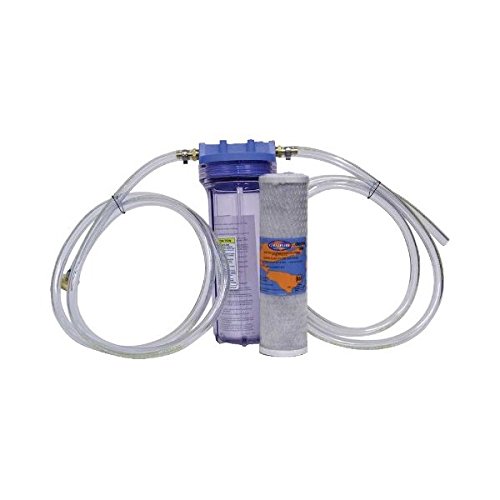
This 10 inch housing is the most complete product in the list. It accepts common carbon block cartridges and fits garden hose or vinyl tubing connections. I installed one under my sink and saw instant reductions in chlorine taste and odor in brewing water.
Carbon block cartridges remove chlorine, chloramine (in many cases with the right cartridge), and some organics. That makes this housing a core part of a true Best Water Filter For Brewing Beer plan. It gives you control over what you remove and how you shape your water profile.
Pros:
- Accepts standard 10″ carbon cartridges for chemical removal
- Includes tubing and garden hose adapters for easy hookup
- Big change in tap taste and smell for brewing water
- Durable housing built for repeated cartridge swaps
- Offers real water conditioning, not just particulate capture
Cons:
- Needs periodic cartridge replacement to remain effective
- Not as portable as inline mesh filters for brew days away
- Initial cost higher than simple inline strainers
My Recommendation
I recommend the 10 Inch Water Filter Housing System to anyone serious about controlling brewing water. It is best for brewers who want chlorine and chloramine removal and the ability to use carbon or specialty cartridges. I installed one and saw improvements in hop aroma and malt clarity.
For a complete Best Water Filter For Brewing Beer setup, use this housing as the first stage to remove chemicals, then follow with an inline mesh to catch particles. The housing gives you more control and makes water work predictable across batches.
| Best for | Why |
|---|---|
| Chemical removal | Houses carbon cartridges that remove chlorine |
| Bench setups | Easy under-sink or faucet hookup for repeat use |
| Consistent water | Gives repeatable tap conditioning across batches |
FAQs Of Best Water Filter For Brewing Beer
What kind of filter removes chlorine for brewing?
Use a carbon block in a 10″ housing. Carbon removes chlorine and improves taste. For chloramine, pick an activated carbon type rated for chloramine or use chemical neutralizers too.
Do mesh inline filters affect water chemistry?
No. Mesh inline filters only catch solids. They do not remove dissolved minerals or chemicals. Use mesh filters for particle control and a housing with carbon for chemical work.
How often should I replace filter cartridges?
Replace carbon cartridges every 3–6 months or sooner if flow drops. Replace mesh or strainers when they are damaged or clogged. I check flow before each brew and swap when needed.
Can I use these filters with a pump?
Yes. Coarser inline filters like 80 mesh work well with pumps. Use finer mesh only if the pump can maintain flow. Always place pre-filters before pumps to protect them from debris.
Will filtering change my water profile for mash pH?
Filtering with carbon removes chlorine but does little to alter hardness or alkalinity. For mash pH adjustments, test water and add salts or acids as needed after filtering. I always test after filtering and adjust.
Final Verdict: Which Should You Buy?
If you want a complete Best Water Filter For Brewing Beer solution, start with the 10 Inch Water Filter Housing System for chemical removal, then add an inline mesh for particle control. That combo gives you clean, predictable tap water and easier brewing.
For pure transfers and low cost, any inline mesh (80 or 100 mesh) works well. Pick the one that fits your lines and flow needs to get more consistent beer, every batch.